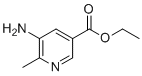
Ethyl 5-amino-6-methylpyridine-3-carboxylate is a chemical compound that consists of a pyridine ring with an amino group at the 5-position, a methyl group at the 6-position, and an ethyl ester group attached to the carboxyl group at the 3-position. Pyridine derivatives are widely used in organic synthesis and medicinal chemistry due to their versatility and ability to interact with various biological systems.
The discovery and development of this compound are rooted in the broader field of pyridine chemistry, where modifications of the pyridine ring lead to compounds with diverse biological activities. The introduction of the amino group at the 5-position of the pyridine ring enhances the potential for hydrogen bonding and can influence the compound's ability to interact with specific enzymes or receptors. The methyl group at the 6-position can affect the steric properties of the molecule, possibly impacting its ability to bind to biological targets.
Ethyl 5-amino-6-methylpyridine-3-carboxylate has been explored primarily in medicinal chemistry, where its structural features make it an interesting candidate for drug development. Pyridine derivatives, especially those with functional groups like amino and carboxylates, are often studied for their potential as antimicrobial, anti-inflammatory, and anticancer agents. The carboxylate group can contribute to solubility and polarity, improving the compound's pharmacokinetic properties, such as absorption and distribution.
The compound's amino group may enable it to interact with certain enzymes or receptors, while the ethyl ester can facilitate its metabolic conversion to more active forms once administered. This ester functionality is commonly used to improve the lipophilicity of molecules and enhance their ability to cross biological membranes, which is crucial for oral bioavailability.
Ethyl 5-amino-6-methylpyridine-3-carboxylate can be synthesized through standard organic reactions involving the pyridine ring, such as nucleophilic substitution and esterification. The synthesis typically starts with commercially available pyridine derivatives, followed by the introduction of the amino and methyl groups, as well as the esterification of the carboxylic acid.
Beyond its potential in drug design, this compound may also serve as an intermediate in the synthesis of more complex molecules, expanding its applications in the creation of other bioactive compounds. Pyridine-based scaffolds, especially those with diverse functional groups, are commonly employed in the development of materials, ligands for metal coordination chemistry, and catalysts in organic synthesis.
In conclusion, ethyl 5-amino-6-methylpyridine-3-carboxylate is a compound with significant potential in medicinal chemistry. Its structural features make it a valuable building block for drug discovery, particularly in the development of agents targeting enzymes or receptors involved in various diseases. Additionally, its synthesis and functional properties open opportunities for use in a broad range of chemical applications, from materials science to advanced organic synthesis.
|




 GHS07 Warning Details
 chemBlink Chemical Story