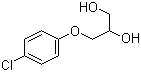
Chlorphenesin, chemically known as 3-(4-chlorophenoxy)-1,2-propanediol, is an aromatic ether alcohol with the molecular formula C9H11ClO3. Although it was originally introduced as an antimicrobial agent for pharmaceutical use, today it is best known worldwide as a multifunctional preservative enhancer and antimicrobial ingredient in cosmetic and personal care products. Its history illustrates how a compound developed for one purpose can find lasting value in an entirely different field.
Chlorphenesin was developed during the rapid expansion of synthetic antimicrobial research in the years following the Second World War. During this period, considerable effort was devoted to discovering compounds that combined broad antimicrobial activity with relatively low toxicity to humans. Among the phenoxy alcohol derivatives investigated, chlorphenesin attracted attention because it inhibited the growth of a wide range of bacteria and fungi while exhibiting acceptable stability in pharmaceutical formulations. Early studies also showed that the compound possessed skeletal muscle relaxant activity, leading to its evaluation in topical medicinal preparations for painful musculoskeletal conditions.
Although chlorphenesin demonstrated useful pharmacological properties, it was eventually overshadowed by newer muscle relaxants and more potent systemic antimicrobial agents. Rather than disappearing from practical use, however, it found a new role in cosmetic science. Formulators recognized that chlorphenesin provided reliable protection against microbial contamination in creams, lotions, shampoos, and other water-containing products without significantly affecting product appearance or fragrance. This transition from pharmaceutical ingredient to cosmetic preservative represents one of the more successful examples of repurposing within the chemical industry.
Unlike traditional preservatives that are intended to provide complete preservation on their own, chlorphenesin is frequently used as part of a balanced preservation system. It exhibits activity against many bacteria, yeasts, and molds and is often combined with other preservatives to broaden antimicrobial coverage while allowing lower concentrations of individual ingredients. Such combinations help manufacturers formulate products that remain microbiologically stable throughout storage and normal consumer use.
Another reason for the continued popularity of chlorphenesin is its favorable formulation characteristics. It is compatible with a wide variety of cosmetic ingredients, remains reasonably stable over the pH range encountered in most personal care products, and is sufficiently soluble to be incorporated into numerous formulations. These practical advantages have contributed significantly to its widespread adoption by cosmetic manufacturers around the world.
As cosmetic products became increasingly sophisticated, regulatory agencies began evaluating preservative ingredients more systematically. Chlorphenesin has therefore been reviewed repeatedly by scientific and regulatory organizations with respect to consumer safety. In the European Union, for example, the Scientific Committee on Consumer Safety (SCCS) has concluded that chlorphenesin is considered safe for use in cosmetic products within the concentration limits established by the Cosmetics Regulation. Similar scientific evaluations in other jurisdictions have supported its continued use when applied according to established safety requirements.
Today, chlorphenesin is used in facial creams, moisturizers, sunscreens, foundations, cleansing products, hair-care products, deodorants, and numerous other cosmetic formulations. Although consumers rarely notice its presence, it plays an essential role in maintaining product quality by preventing microbial growth during storage and use. In this respect, chlorphenesin contributes not only to product shelf life but also to consumer safety.
The history of chlorphenesin reflects an important theme in modern applied chemistry: the long-term value of a chemical substance often depends not only on its original purpose but also on the discovery of new applications. From an experimental pharmaceutical compound to one of today's widely used cosmetic preservation ingredients, chlorphenesin demonstrates how advances in microbiology, formulation science, and regulatory evaluation together shape the evolution of modern specialty chemicals.
**References**
1. Kabara, J.J. (ed.) (1984) *Cosmetic and Drug Preservation: Principles and Practice*. Marcel Dekker, New York.
2. Scientific Committee on Consumer Safety (SCCS) (2019) *Opinion on Chlorphenesin (SCCS/1609/19).* European Commission.
https://health.ec.europa.eu/publications/sccs-final-opinion-chlorphenesin_en
3. Barel, A.O., Paye, M. and Maibach, H.I. (eds.) (2014) *Handbook of Cosmetic Science and Technology*, 4th ed. CRC Press.
|





 GHS05;GHS07 Danger Details
 chemBlink Chemical Story