
Online Database of Chemicals from Around the World
| BOC Sciences | USA | |||
|---|---|---|---|---|
 | www.bocsci.com | |||
 | +1 (631) 485-4226 | |||
 | +1 (631) 614-7828 | |||
 | info@bocsci.com | |||
| Chemical manufacturer | ||||
| chemBlink Standard supplier since 2010 | ||||
| Topscience Co. Ltd. | China | |||
|---|---|---|---|---|
| www.tsbiochem.com | |||
| +86 (400) 820-0310 | |||
| +86 (021) 3469-2979 | |||
| sales@tsbiochem.com | |||
| Chemical manufacturer since 2013 | ||||
| chemBlink Standard supplier since 2012 | ||||
| RIA International LLC | USA | |||
|---|---|---|---|---|
| www.riausa.net | |||
| +1 (973) 581-1282 | |||
| +1 (973) 581-1283 | |||
| marketing@riausa.net ria@riausa.net | |||
| Chemical distributor since 1986 | ||||
| chemBlink Standard supplier since 2016 | ||||
| Novo Nordisk Pharmatech A/S | Denmark | |||
|---|---|---|---|---|
| novonordiskpharmatech.com | |||
| +45 5667 1000 | |||
| nnprinfo@novonordiskpharmatech.com | |||
| Chemical manufacturer since 1949 | ||||
| chemBlink Standard supplier since 2021 | ||||
| Beijing Scipromed Biotech Co.,ltd. | China | |||
|---|---|---|---|---|
| www.sciprotech.com | |||
| +86 13051765615 | |||
| support@sciprotech.com | |||
| Chemical manufacturer since 2023 | ||||
| chemBlink Standard supplier since 2024 | ||||
| Tocris Bioscience Inc. | USA | |||
|---|---|---|---|---|
| www.tocris.com | |||
| +1 (636) 207-7651 | |||
| +1 (636) 207-7683 | |||
| customerservice.na@bio-techne.com | |||
| Chemical manufacturer since 1982 | ||||
| Santa Cruz Biotechnology, Inc. | USA | |||
|---|---|---|---|---|
| www.scbt.com | |||
| +1 (831) 457-3800 | |||
| +1 (831) 457-3801 | |||
| scbt@scbt.com | |||
| Chemical manufacturer | ||||
| Classification | API >> Hormone and endocrine-regulating drugs >> Pancreatic hormones and other blood sugar regulating drugs |
|---|---|
| Name | Insulin (human) |
| Synonyms | ORMD 0801; Oral-lyn; Penfil R; Ultraphane; Umulin; Velosulin HM; 4-[[2-[[88-[[5-amino-2-[[2-[[2-[[2-[(2-aminoacetyl)amino]-3-methylpentanoyl]amino]-3-methylbutanoyl]amino]-4-carboxybutanoyl]amino]-5-oxopentanoyl]amino]-6-[[2-[[2-[[5-amino-2-[[4-amino-2-[[2-[(2-amino-3-phenylpropanoyl)amino]-3-methylbutanoyl]amino]-4-oxobutanoyl]amino]-5-oxopentanoyl]amino]-3-(1H-imidazol-4-yl)propanoyl]amino]-4-methylpentanoyl]amino]-47-[(3-amino-1-carboxy-3-oxopropyl)carbamoyl]-53-(2-amino-2-oxoethyl)-62-(3-amino-3-oxopropyl)-77-butan-2-yl-24,56-bis(2-carboxyethyl)-83-(1-hydroxyethyl)-12,71,80-tris(hydroxymethyl)-33,50,65-tris[(4-hydroxyphenyl)methyl]-15-(1H-imidazol-4-ylmethyl)-27-methyl-18,30,36,59,68-pentakis(2-methylpropyl)-7,10,13,16,19,22,25,28,31,34,37,40,49,52,55,58,61,64,67,70,73,76,79,82,85,87-hexacosaoxo-21,39-di(propan-2-yl)-3,4,44,45,90,91-hexathia-8,11,14,17,20,23,26,29,32,35,38,41,48,51,54,57,60,63,66,69,72,75,78,81,84,86-hexacosazabicyclo[72.11.7]dononacontane-42-carbonyl]amino]acetyl]amino]-5-[[1-[[2-[[1-[[1-[[1-[[1-[2-[[6-amino-1-[(1-carboxy-2-hydroxypropyl)amino]-1-oxohexan-2-yl]carbamoyl]pyrrolidin-1-yl]-3-hydroxy-1-oxobutan-2-yl]amino]-3-(4-hydroxyphenyl)-1-oxopropan-2-yl]amino]-1-oxo-3-phenylpropan-2-yl]amino]-1-oxo-3-phenylpropan-2-yl]amino]-2-oxoethyl]amino]-5-carbamimidamido-1-oxopentan-2-yl]amino]-5-oxopentanoic acid |
| Molecular Structure | 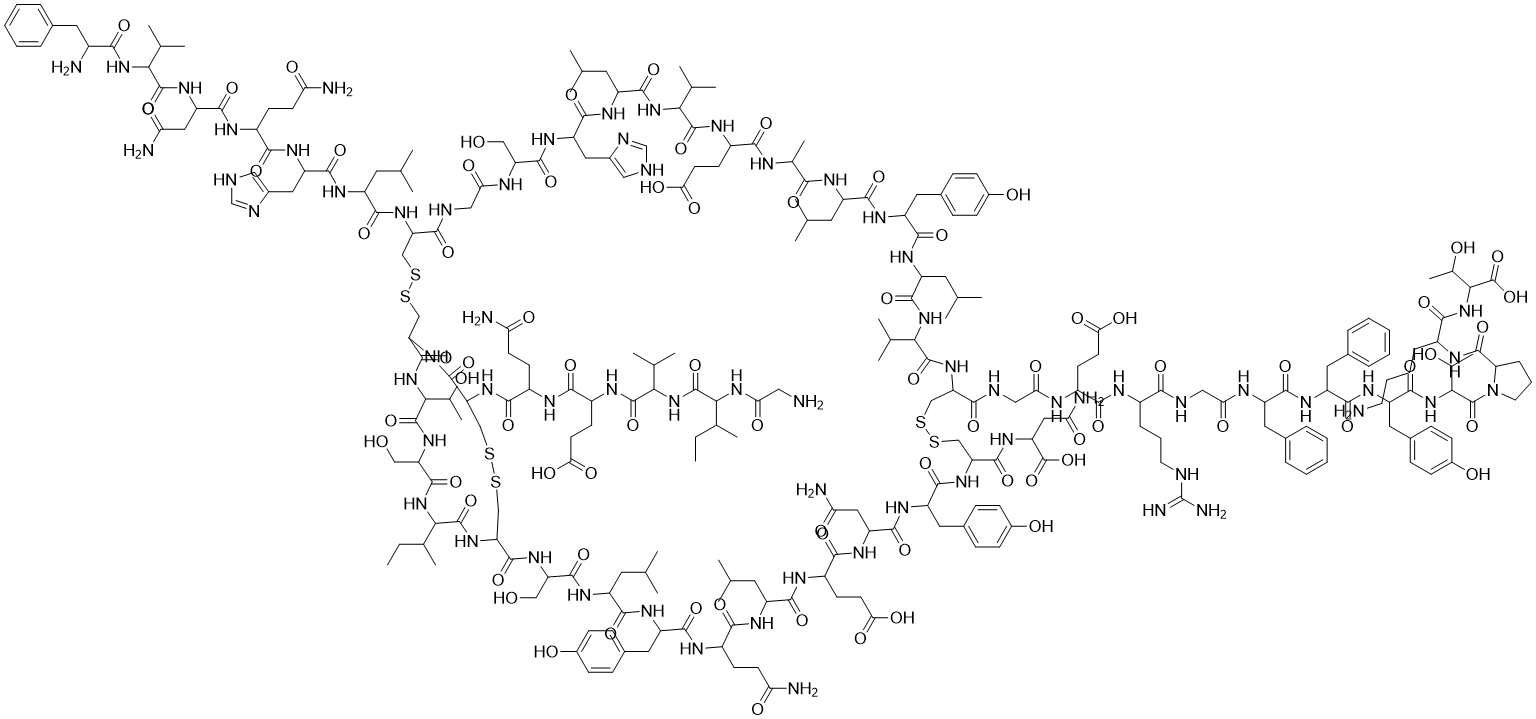 |
| Molecular Formula | C257H383N65O77S6 |
| Molecular Weight | 5807.58 |
| CAS Registry Number | 11061-68-0 |
| EC Number | 234-279-7 |
| SMILES | CCC(C)C1C(=O)NC2CSSCC(C(=O)NC(CSSCC(C(=O)NCC(=O)NC(C(=O)NC(C(=O)NC(C(=O)NC(C(=O)NC(C(=O)NC(C(=O)NC(C(=O)NC(C(=O)NC(C(=O)NC(C(=O)NC(CSSCC(NC(=O)C(NC(=O)C(NC(=O)C(NC(=O)C(NC(=O)C(NC(=O)C(NC(=O)C(NC(=O)C(NC2=O)CO)CC(C)C)CC3=CC=C(C=C3)O)CCC(=O)N)CC(C)C)CCC(=O)O)CC(=O)N)CC4=CC=C(C=C4)O)C(=O)NC(CC(=O)N)C(=O)O)C(=O)NCC(=O)NC(CCC(=O)O)C(=O)NC(CCCNC(=N)N)C(=O)NCC(=O)NC(CC5=CC=CC=C5)C(=O)NC(CC6=CC=CC=C6)C(=O)NC(CC7=CC=C(C=C7)O)C(=O)NC(C(C)O)C(=O)N8CCCC8C(=O)NC(CCCCN)C(=O)NC(C(C)O)C(=O)O)C(C)C)CC(C)C)CC9=CC=C(C=C9)O)CC(C)C)C)CCC(=O)O)C(C)C)CC(C)C)CC2=CNC=N2)CO)NC(=O)C(CC(C)C)NC(=O)C(CC2=CNC=N2)NC(=O)C(CCC(=O)N)NC(=O)C(CC(=O)N)NC(=O)C(C(C)C)NC(=O)C(CC2=CC=CC=C2)N)C(=O)NC(C(=O)NC(C(=O)N1)CO)C(C)O)NC(=O)C(CCC(=O)N)NC(=O)C(CCC(=O)O)NC(=O)C(C(C)C)NC(=O)C(C(C)CC)NC(=O)CN |
| Boiling Point | 1308.5±65.0 °C (760 mmHg), Calc.* |
|---|---|
| Flash Point | 745.1±34.3 °C, Calc.* |
| * | Calculated using Advanced Chemistry Development (ACD/Labs) Software. |
| SDS | Available |
|---|---|
 chemBlink Chemical Story
|
The discovery and development of human insulin are milestones in medical science that have revolutionized the treatment of diabetes. Insulin, a hormone produced by the pancreas, is essential for regulating blood glucose levels. The advancements in insulin therapy, particularly the shift from animal-derived to recombinant human insulin, have greatly improved the management of diabetes. The journey began in 1921 with the groundbreaking work of Canadian researchers Frederick Banting and Charles Best. They successfully isolated insulin from the pancreas of dogs, a discovery that was foundational in transforming diabetes from a terminal illness to a manageable condition. Banting and Best demonstrated that insulin could effectively lower blood glucose levels in diabetic dogs, paving the way for its use in human medicine. Their work was further supported by previous studies from Paul Langerhans, who had identified insulin-producing cells in the pancreas. The clinical use of insulin began soon after, dramatically altering the prognosis for people with diabetes, who previously had limited options for managing their condition. Initially, insulin for treatment was derived from the pancreases of cows and pigs. While this animal-derived insulin was a significant advancement, it had its limitations. Variations in potency and the potential for allergic reactions were some of the challenges faced by patients using animal insulin. The real breakthrough came with the advent of recombinant DNA technology in the 1970s. Scientists such as Herbert Boyer and Stanley Cohen pioneered this technology, enabling the production of human insulin through genetic engineering. By inserting the human insulin gene into bacterial or yeast cells, they were able to produce insulin identical to that naturally occurring in the human body. This innovation marked a new era in biotechnology and diabetes treatment, significantly improving the consistency and safety of insulin therapy. Human insulin, produced via recombinant DNA technology, offers several advantages over its animal-derived predecessors. It has a more consistent potency and a lower risk of allergic reactions, leading to improved glycemic control for patients. The availability of human insulin has transformed diabetes management, allowing millions of people to live healthier lives with better control over their condition. This has been crucial in reducing the long-term complications associated with diabetes, such as cardiovascular disease and neuropathy. The impact of human insulin extends beyond improved management of diabetes. It has led to further innovations in diabetes care, including the development of various insulin formulations such as rapid-acting and long-acting insulins. These modern formulations provide more flexible and precise control of blood glucose levels, mimicking the body’s natural insulin secretion more closely. Ongoing research continues to explore new insulin delivery methods and adjunct therapies to further enhance diabetes management. The journey from the discovery of insulin to the development of recombinant human insulin represents a monumental achievement in medical science. This progress has not only improved the lives of millions of individuals with diabetes but has also set a precedent for future advancements in biotechnology and therapeutic interventions. |
| Market Analysis Reports |