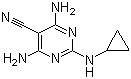
Dicyclanil is an insect growth regulator belonging to the pyrimidine class of compounds. It has been developed and widely used in veterinary medicine, primarily for the protection of sheep against blowfly strike, a condition caused by the larvae of *Lucilia cuprina* and related species. Blowfly strike is a severe parasitic disease that results in tissue damage, secondary infections, and significant economic losses in sheep farming. The introduction of dicyclanil represented an important advancement in integrated parasite control due to its ability to provide extended protection compared to older compounds.
The discovery of dicyclanil was linked to the search for safer and more effective alternatives to organophosphates and synthetic pyrethroids, which were widely used for ectoparasite control but presented issues of resistance, shorter duration of activity, and potential toxicity to non-target organisms. As a triazine-pyrimidine derivative, dicyclanil works by interfering with chitin synthesis and molting in insects, disrupting their normal growth and development without exhibiting strong adulticidal activity. This mode of action makes it particularly effective as a preventative measure, stopping the establishment of blowfly larvae before they cause clinical strike.
One of the most notable applications of dicyclanil has been in the formulation of pour-on and spray-on products for sheep. When applied, the compound distributes across the fleece and skin, providing residual activity that prevents larvae from developing. The compound’s long duration of action—often several months—has made it especially valuable in regions with high blowfly pressure, as it reduces the frequency of treatments required during a season. This not only improves animal welfare but also reduces labor costs for farmers.
The effectiveness of dicyclanil in controlling blowfly strike has been demonstrated in multiple field studies, where its use significantly lowered the incidence of infestation compared to untreated animals or those treated with shorter-acting chemicals. In addition, dicyclanil exhibits a favorable safety profile in target animals, with low systemic absorption and minimal adverse effects when applied according to label instructions.
Another important application of dicyclanil has been its role in resistance management strategies. Resistance to older classes of insecticides has been a growing concern in blowfly populations. The distinct mode of action of dicyclanil compared to organophosphates and pyrethroids has helped delay resistance development when incorporated into rotational treatment programs. However, resistance monitoring remains an essential part of its use, as reduced susceptibility to dicyclanil has been reported in some field populations after widespread and prolonged application.
Beyond its main use in sheep, dicyclanil has limited applications in other livestock, as its registration is largely restricted to ovine ectoparasite control. Its targeted application helps to limit environmental exposure and non-target effects. Still, as with many ectoparasiticides, the potential for residues in meat and wool has been carefully assessed, and withdrawal periods are established to ensure food safety and compliance with international trade standards.
The introduction of dicyclanil also influenced management practices in sheep farming, as it provided farmers with a longer-acting and more reliable means of blowfly strike prevention. This has contributed to improved animal health, welfare, and productivity. Combined with other measures such as breeding for flystrike resistance, improved husbandry, and integrated pest management strategies, dicyclanil remains a cornerstone chemical in modern sheep production systems.
In conclusion, dicyclanil represents a major advance in veterinary ectoparasitology. Its discovery and development provided an effective, long-lasting, and relatively safe option for controlling blowfly strike in sheep, addressing a major challenge in animal health and welfare. Although vigilance is required to manage resistance, its role in integrated parasite control programs has ensured its continued importance in sheep husbandry worldwide.
|




 GHS07 Warning Details
 chemBlink Chemical Story