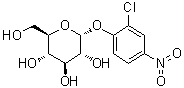
2-Chloro-4-nitrophenyl alpha-D-glucopyranoside is a synthetic glycoside compound where a 2-chloro-4-nitrophenyl group is linked to the anomeric carbon of the alpha-D-glucopyranose sugar. This compound belongs to the class of aryl glycosides, which are widely used as substrates in enzymatic studies, especially for glycosidases.
The discovery of 2-chloro-4-nitrophenyl alpha-D-glucopyranoside relates to the broader development of chromogenic substrates designed to facilitate the detection and quantification of glycosidase enzyme activities. The 2-chloro-4-nitrophenyl moiety acts as a chromogenic leaving group, which upon enzymatic cleavage releases the 2-chloro-4-nitrophenol molecule. This release can be monitored spectrophotometrically due to the distinct absorbance of the chromophore, making it a convenient and sensitive method for enzyme assays.
This compound has found extensive application in biochemical and molecular biology research as a substrate to measure the activity of enzymes such as beta-glucosidases. It enables the study of enzyme kinetics, substrate specificity, and inhibitor screening. The sensitivity of the chromogenic assay using 2-chloro-4-nitrophenyl alpha-D-glucopyranoside allows researchers to detect low levels of enzymatic activity in various biological samples, including tissues, microorganisms, and purified enzyme preparations.
In industrial biotechnology, this glycoside substrate is employed to evaluate enzyme preparations used in processes such as biomass degradation, food processing, and pharmaceutical manufacturing. The ability to rapidly and accurately assess beta-glucosidase activity contributes to optimizing enzyme formulations and improving process efficiencies.
Moreover, 2-chloro-4-nitrophenyl alpha-D-glucopyranoside is useful in clinical diagnostics, where glycosidase activity can serve as a biomarker for certain diseases or metabolic disorders. Its application in diagnostic kits assists in monitoring enzyme deficiencies or abnormalities related to lysosomal storage diseases and other pathological conditions.
Synthesis of 2-chloro-4-nitrophenyl alpha-D-glucopyranoside typically involves the glycosylation of 2-chloro-4-nitrophenol with protected glucose derivatives under acidic or enzymatic catalysis, followed by deprotection to yield the desired alpha-anomer. The control of stereochemistry at the anomeric center is essential to obtain the alpha configuration, which is biologically relevant for interaction with specific glycosidases.
In summary, 2-chloro-4-nitrophenyl alpha-D-glucopyranoside is a valuable chemical tool extensively utilized in enzymology and biotechnology. Its role as a chromogenic substrate facilitates enzyme activity assays, contributing to advances in research, industrial applications, and clinical diagnostics.
|




 chemBlink Chemical Story