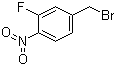
3-Fluoro-4-nitrobenzyl bromide is an organic halide bearing both electron-withdrawing substituents and a reactive benzylic bromide moiety. It belongs to a class of halogenated nitroaromatic compounds that are valuable intermediates in synthetic organic chemistry due to their dual reactivity—aromatic electrophilicity and benzylic substitution potential. The structure consists of a benzene ring substituted with a fluorine atom at the meta position (position 3), a nitro group at the para position (position 4), and a bromomethyl group at the benzylic position.
This compound is typically synthesized from 3-fluoro-4-nitrotoluene through a benzylic bromination reaction. The bromination is often achieved by using N-bromosuccinimide (NBS) under radical conditions, such as the presence of a radical initiator like AIBN (azobisisobutyronitrile) or under UV light. The reaction proceeds via benzylic hydrogen abstraction followed by bromine atom substitution. The presence of both the nitro and fluoro substituents makes the aromatic ring electron-deficient, which helps stabilize the benzylic radical intermediate during bromination.
3-Fluoro-4-nitrobenzyl bromide is widely used as an intermediate in the synthesis of pharmaceuticals, agrochemicals, and biologically active molecules. The benzylic bromide group is a strong electrophile and can undergo nucleophilic substitution reactions with a range of nucleophiles, including amines, thiols, and alkoxides. Such reactivity enables the introduction of various functional groups onto the benzene ring, aiding in the diversification of molecular scaffolds in drug development programs.
One common application involves its use in the synthesis of aryl ether and arylamine derivatives, which are often tested for anti-inflammatory, anti-infective, or anticancer properties. In medicinal chemistry, the nitro group can be further transformed into other functionalities, such as an amino group through reduction, providing additional synthetic versatility. The fluoro substituent plays a significant role in modifying the electronic properties and metabolic stability of drug candidates derived from this scaffold.
In materials science, compounds like 3-fluoro-4-nitrobenzyl bromide are also explored for functionalizing surfaces or polymers. The electrophilic benzylic site can be used to attach these molecules to supports, providing a fluorinated or nitroaromatic environment for further applications in sensors or coatings.
In handling, 3-fluoro-4-nitrobenzyl bromide must be treated with care. The compound is a potential irritant and sensitizer and should be handled in a fume hood with appropriate personal protective equipment. As with other nitroaromatic compounds, it may exhibit toxicity or environmental hazards, so proper disposal procedures should be followed.
References
2020. Iridium- and Rhodium-Catalyzed Asymmetric Radical Processes. Science of Synthesis.
URL: https://science-of-synthesis.thieme.com/app/text/?id=SD-233-00211
1999. S(N)Ar-based cycloetherification methodology: application in the synthesis of heterodectic macrocyclic peptides with endo aryl-aryl and aryl-alkyl ether bonds. Methods in Molecular Medicine, 23.
DOI: 10.1385/0-89603-517-4:293
|





 GHS05;GHS07 Danger Details
 chemBlink Chemical Story