Potassium antimony tartrate (also known as tartar emetic) was discovered by German chemist Andreas Libavius ??in the 17th century and is a mixture of antimony and tartaric acid. Tartaric emetics were originally highly regarded for their medicinal properties and were used in traditional medicine to induce vomiting and treat various diseases.
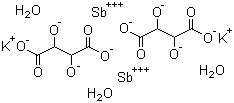
A notable feature of potassium antimony tartrate is its complex molecular structure, which gives it a variety of properties and applications. This compound, composed of antimony, potassium and tartaric acid, has both metallic properties and acidic properties, making it widely used in chemical reactions and medicines.
In the field of chemistry, potassium antimony tartrate is used as a catalyst and reagent in a variety of synthetic processes. It is able to promote redox reactions and complex reactions, and is of great value in organic synthesis and can be used to produce drugs, dyes and fine chemicals. In addition, potassium antimony tartrate is used as a mordant in textile dyeing, fixing the dye on the fabric and improving color fastness.
Potassium antimony tartrate has historical significance in metallurgy and alchemy. In the 18th and 19th centuries, it was used to produce mirrors and as a coating material on glass surfaces. Potassium antimony tartrate also plays a role in the refining of precious metals such as gold and silver, where it can be used to separate impurities and increase the purity of metals.
In medicine, potassium antimony tartrate has a long history as both a therapeutic agent and a poison. While it was once used as an emetic and to treat leishmaniasis and schistosomiasis, its toxicity ultimately led to its abandonment in favor of safer alternatives. However, potassium antimony tartrate still has historical significance in pharmacology and toxicology research, providing insights into the evolution of medical practice and drug development.
Potassium antimony tartrate is also used to preserve wood and textiles. Its ability to inhibit the growth of fungi and insects makes it a valuable additive in wood preservatives and pesticides, helping to protect wooden structures and fabrics from decay and damage.
Despite its historical significance and multiple uses, potassium antimony tartrate's use is not without controversy. Due to its toxicity, exposure to high concentrations of potassium antimony tartrate can have serious health effects, including nausea, vomiting, and organ damage. As a result, there are strict regulations for its use and handling in industrial settings, emphasizing the need to take appropriate safety precautions and risk management measures.
|




 GHS07 Warning Details
 chemBlink Chemical Story