Bilastine is a second-generation antihistamine that selectively antagonizes peripheral histamine H1 receptors. It is used primarily for the symptomatic treatment of allergic conditions such as allergic rhinitis and chronic idiopathic urticaria. Bilastine’s development aimed to provide effective relief from allergic symptoms with minimal sedation and central nervous system side effects, distinguishing it from first-generation antihistamines.
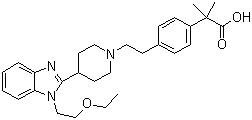
Bilastine was first synthesized and characterized in the early 2000s. It underwent extensive clinical evaluation and was approved in multiple countries beginning in the 2010s for use as an oral antihistamine. The compound’s chemical structure confers high affinity and selectivity for H1 receptors, with negligible penetration across the blood-brain barrier, which accounts for its low sedative potential.
Pharmacodynamically, bilastine acts by competitively inhibiting the binding of histamine to H1 receptors on effector cells, such as those in the respiratory tract and skin. This inhibition prevents the typical allergic cascade involving vasodilation, increased vascular permeability, and sensory nerve activation, thus reducing symptoms like nasal congestion, sneezing, itching, and hives.
Bilastine is administered orally, typically as tablets, and is characterized by rapid absorption and a bioavailability of approximately 60%. It does not undergo significant metabolism, with the majority of the unchanged drug excreted via feces and urine. The elimination half-life ranges from 14 to 15 hours, allowing for once-daily dosing.
Clinically, bilastine is indicated for the treatment of seasonal and perennial allergic rhinitis and chronic urticaria in adults and adolescents. Studies have demonstrated its efficacy in reducing symptoms without causing sedation or impairing cognitive function, which is a notable advantage over some other antihistamines. It has also shown a favorable safety and tolerability profile, with adverse effects generally mild and infrequent, including headache and gastrointestinal discomfort.
Bilastine’s lack of significant drug interactions and minimal central nervous system effects has contributed to its growing use in allergy management worldwide. It is considered effective in improving quality of life for patients with allergic conditions by providing sustained symptom control with a low risk of adverse effects.
In summary, bilastine is a selective, non-sedating second-generation H1 antihistamine used in the treatment of allergic rhinitis and chronic urticaria. Its pharmacological properties and clinical efficacy have established it as a valuable option in allergy therapy with a favorable safety profile.
References
2009. Efficacy and safety of bilastine 20 mg compared with cetirizine 10 mg and placebo for the symptomatic treatment of seasonal allergic rhinitis: a randomized, double-blind, parallel-group study. Clinical and Experimental Allergy, 39(9).
DOI: 10.1111/j.1365-2222.2009.03257.x
2024. Bioequivalence and Safety of Bilastine 20 mg Orodispersible Tablets and Conventional Tablets: A Randomized, Single-Dose, Two-Period Crossover Study in Healthy Volunteers Under Fasting Conditions. Drugs in R&D, 24(2).
DOI: 10.1007/s40268-024-00480-8
2024. Comparative inhibition by oral bilastine, parenteral dexchlorpheniramine, and a new bilastine parenteral (i.v. and i.m.) formulation of histamine-induced wheal and flare response: A randomised phase I trial. European Journal of Pharmaceutical Sciences, 201.
DOI: 10.1016/j.ejps.2024.106900
|




 GHS07 Warning Details
 chemBlink Chemical Story