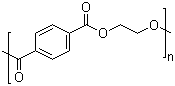
Poly(oxy-1,2-ethanediyloxycarbonyl-1,4-phenylenecarbonyl), commonly referred to as poly(ethylene glycol) (PEG) derivatives, has garnered attention for its unique chemical properties and diverse applications in various fields. The discovery of this substance can be traced back to advancements in polymer chemistry, particularly during the mid-20th century, when scientists began to explore the potential of polyethylene glycol and its derivatives for various industrial and biomedical applications.
PEG is a hydrophilic polymer formed through the polymerization of ethylene oxide. Its structure consists of repeating units of ethylene glycol, which provides its distinctive properties, including water solubility, biocompatibility, and low toxicity. The specific derivative poly(oxy-1,2-ethanediyloxycarbonyl-1,4-phenylenecarbonyl) represents a modification of the basic PEG structure, incorporating carbonyl groups that enhance its functionality.
The introduction of carbonyl groups into the PEG backbone significantly alters its chemical behavior. This modification allows for improved interaction with biological systems, making it an ideal candidate for drug delivery systems, where controlled release and targeted delivery are essential. The carbonyl functionalities facilitate the conjugation of various therapeutic agents, enhancing their solubility and bioavailability.
In biomedical applications, PEG derivatives are widely used in the formulation of pharmaceuticals, particularly in the development of hydrogels and drug delivery carriers. These materials can encapsulate drugs and release them in a controlled manner, improving therapeutic efficacy and minimizing side effects. The biocompatibility of PEG derivatives is critical in designing implants and devices for medical use, ensuring that they do not elicit adverse immune responses.
Beyond the realm of medicine, poly(oxy-1,2-ethanediyloxycarbonyl-1,4-phenylenecarbonyl) finds applications in various industrial processes. Its hydrophilic nature makes it useful in cosmetics and personal care products, where it serves as a humectant, enhancing moisture retention in formulations. Additionally, its ability to modify surface properties allows it to be used in coatings and adhesives, providing improved adhesion and stability.
Research continues to explore the potential of PEG derivatives in novel applications, including regenerative medicine and tissue engineering. The ability to manipulate the molecular weight and chemical structure of PEG allows scientists to tailor its properties for specific applications, paving the way for innovative solutions in various fields.
The ongoing advancements in polymer chemistry and material science will likely yield further enhancements to the functionality of poly(oxy-1,2-ethanediyloxycarbonyl-1,4-phenylenecarbonyl) and its derivatives, expanding their applicability and impact across different sectors.
|




 GHS07 Warning Details
 chemBlink Chemical Story