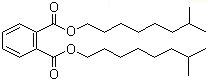
Diisononyl phthalate, commonly abbreviated as DINP, is a high molecular weight phthalate ester used primarily as a plasticizer. It is produced by the esterification of phthalic anhydride with isononyl alcohol, a mixture of C9 branched-chain isomers. The resulting compound is a colorless, viscous liquid with low volatility and excellent compatibility with polyvinyl chloride (PVC) and other polymers. Its chemical structure provides enhanced performance characteristics, especially in terms of durability, low migration, and resistance to high temperatures compared to lower molecular weight phthalates.
The development of DINP began in response to the limitations of earlier plasticizers like di(2-ethylhexyl) phthalate (DEHP), which exhibited higher volatility and migration rates. During the 1970s and 1980s, research into branched alcohol-derived phthalates showed that longer and more complex alkyl chains could yield improved plasticizer performance. Industrial synthesis of DINP became commercially viable with the refinement of oxo-alcohol processes, which enabled the production of mixed isononyl alcohols in sufficient quantities and purity. As a result, DINP emerged as an important general-purpose plasticizer for flexible PVC formulations.
DINP is primarily used in the production of flexible PVC products, including flooring, wall coverings, wire and cable insulation, automotive parts, and coated fabrics. Its ability to provide softness and flexibility over a wide range of temperatures makes it suitable for both indoor and outdoor applications. In construction materials, DINP contributes to weather-resistant coatings and resilient flooring systems. In the automotive industry, it is used in interior trim components, underbody coatings, and wire harness insulation, where its durability and low fogging properties are essential.
The use of DINP extends beyond PVC into other polymer systems where plasticizers are required, such as certain types of rubber and synthetic leather. DINP’s high molecular weight reduces the tendency of the plasticizer to migrate out of the polymer matrix over time, a factor that contributes to improved product longevity and compliance with performance specifications. Its relatively low volatility makes it especially useful in high-temperature applications where retention of physical properties is critical.
In addition to its mechanical and chemical advantages, DINP has been subject to extensive toxicological and environmental evaluation. Unlike some low molecular weight phthalates, DINP has shown lower acute toxicity and reduced endocrine-disrupting potential in multiple studies. Its large molecular size and low solubility limit its absorption and bioavailability in environmental and biological systems. Regulatory assessments by agencies in various countries, including the European Chemicals Agency and the U.S. Consumer Product Safety Commission, have generally supported its use in many industrial and commercial applications, though some restrictions apply in sensitive uses such as toys and childcare articles.
DINP has been evaluated for migration in consumer products, particularly in materials that come into contact with skin or food. While its migration rates are lower than many phthalates, product-specific assessments are necessary to ensure compliance with applicable safety standards. Analytical methods for detecting DINP in materials and biological samples have been well established, including techniques such as gas chromatography-mass spectrometry and high-performance liquid chromatography.
As regulatory scrutiny over plasticizers continues to evolve, DINP remains a subject of ongoing research. Alternative plasticizers with bio-based origins or non-phthalate structures are under development, but DINP continues to be widely used due to its cost-effectiveness, performance record, and regulatory acceptance in many regions. Current trends in formulation and processing aim to further reduce emissions, improve recyclability, and support lifecycle management of materials containing DINP.
References
2025. Preventive antioxidant strategies to reduce the effects of phthalate exposure on reproductive health. Discover Environment, 3(1).
DOI: 10.1007/s44274-025-00257-z
2024. The impact of exposure to phthalates in thyroid function of children and adolescents: a systematic review. European Journal of Pediatrics, 184(3).
DOI: 10.1007/s00431-024-05939-z
2024. Functions of Langerhans cells in diisononyl phthalate-aggravated allergic contact dermatitis. International Immunopharmacology, 142.
DOI: 10.1016/j.intimp.2024.113493
|




 GHS07 Warning Details
 chemBlink Chemical Story