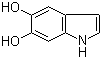
5,6-Dihydroxyindole (DHI) is an organic compound discovered during studies on the biochemistry of melanin, the pigment responsible for coloring in skin, hair, and eyes. It was first identified in the mid-20th century as a key intermediate in the biosynthesis of eumelanin, one of the main types of melanin. Researchers exploring the metabolic pathways of melanin production recognized DHI as a crucial precursor formed from the oxidation of L-DOPA, itself a product of the amino acid tyrosine. This discovery shed light on the complex chemical processes involved in pigmentation and laid the groundwork for further investigations into melanin-related disorders and potential applications of DHI.
5,6-Dihydroxyindole is pivotal in the study of pigment formation, particularly eumelanin. Understanding its role in melanin biosynthesis has significant implications for dermatology. Research into DHI and melanin production helps in developing treatments for pigmentation disorders such as vitiligo and hyperpigmentation. By manipulating the levels of DHI or its enzymatic conversion, scientists can explore potential therapies to regulate melanin production, offering solutions for skin conditions characterized by abnormal pigmentation.
In the hair and cosmetic industry, DHI has applications in hair dye formulations. As a melanin precursor, it can be utilized to create more natural-looking and durable hair color products. Innovations in this area focus on mimicking natural pigmentation processes to achieve colors that are long-lasting and resistant to fading. Additionally, DHI-based compounds are explored for their potential to enhance the protective properties of skin and hair, providing benefits such as UV protection and antioxidative effects.
DHI plays a critical role in biomedical research, particularly in understanding and combating oxidative stress. Its involvement in melanin production links it to the body's defense mechanisms against UV radiation and reactive oxygen species. Studying DHI can contribute to the development of antioxidants and protective agents that mitigate oxidative damage, relevant in conditions like neurodegenerative diseases, where oxidative stress is a contributing factor.
Emerging research suggests that DHI and its derivatives may have neuroprotective properties. In the central nervous system, melanin-like compounds are thought to play a role in protecting neurons from damage. By exploring the properties of DHI, scientists aim to develop new therapeutic strategies for neurodegenerative diseases such as Parkinson's disease, where melanin-producing neurons are particularly affected.
Beyond its biological importance, DHI finds applications in environmental and industrial fields. Its chemical properties are leveraged in the synthesis of novel polymers and materials with unique functionalities. These materials can be used in various applications, from sensors to catalysts, highlighting the versatility of DHI in scientific and industrial innovation.
References
2024. Microbial cell factories for melanin production: progress and opportunities for industrial production. Biologia, 79(7).
DOI: 10.1007/s11756-024-01620-w
2024. Structural disruption of melanin-like polymers with boosted UV protection. Science China Chemistry, 67(5).
DOI: 10.1007/s11426-023-1928-3
2024. Formation of Natural Melanin/TiO2 Nanostructure Hybrids with Enhanced Optical, Thermal and Magnetic Properties as a Soft Material. Journal of Wuhan University of Technology-Materials Science Edition, 39(3).
DOI: 10.1007/s11595-024-2917-3
|






 GHS05;GHS07;GHS09 Danger Details
 chemBlink Chemical Story