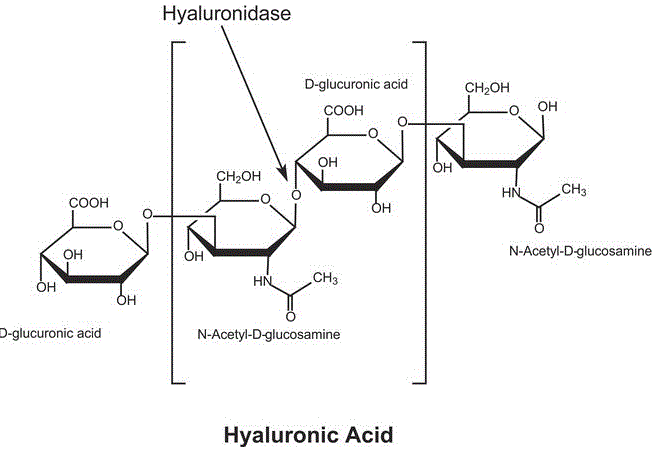
Hyaluronidase (cow testis isoenzyme) is an enzyme that catalyzes the degradation of hyaluronic acid, a key component of the extracellular matrix. This enzyme has been widely studied for its biological significance and various applications in medicine, pharmaceuticals, and biotechnology. Derived from bovine testicular tissue, it has been an important research subject since its initial discovery due to its ability to modify tissue permeability and facilitate the diffusion of therapeutic agents.
The discovery of hyaluronidase dates back to the early 20th century when researchers identified its enzymatic activity in mammalian tissues. It was first recognized for its role in breaking down hyaluronic acid, leading to increased tissue permeability. The cow testis isoenzyme, specifically, was later isolated and studied for its unique biochemical properties, making it a valuable tool in various medical and pharmaceutical applications.
One of the most significant applications of hyaluronidase (cow testis isoenzyme) is in medicine, where it is used as a spreading factor to enhance the absorption and dispersion of injected drugs. By hydrolyzing hyaluronic acid, the enzyme reduces tissue viscosity, allowing for improved diffusion of substances such as local anesthetics, chemotherapeutic agents, and other injectable drugs. This property makes it particularly useful in ophthalmic surgery, where it facilitates the administration of intraocular medications.
Hyaluronidase also plays a crucial role in dermatology and plastic surgery. It is commonly used to reverse the effects of hyaluronic acid-based dermal fillers by breaking down excess filler material. This application provides a corrective measure for aesthetic treatments, ensuring patient safety and satisfaction. In addition, the enzyme has been explored for its potential in treating conditions such as edema, where excessive accumulation of hyaluronic acid leads to tissue swelling.
Another important use of hyaluronidase is in reproductive medicine. The enzyme is involved in the natural fertilization process by aiding sperm penetration through the hyaluronic acid-rich extracellular matrix of the ovum. This biological function has led to research into its role in assisted reproductive technologies, where it may help improve sperm motility and fertilization success rates.
In biotechnology, hyaluronidase (cow testis isoenzyme) is used in cell biology research to facilitate tissue dissociation and cell isolation. By breaking down the extracellular matrix, the enzyme enables researchers to obtain single-cell suspensions for various experimental applications, including stem cell research, cancer studies, and drug development.
Despite its wide range of applications, the use of hyaluronidase has also raised concerns regarding allergic reactions and potential side effects. While generally well-tolerated, some individuals may experience hypersensitivity to bovine-derived enzymes. This has led to the development of recombinant human hyaluronidase as an alternative, reducing the risk of immunogenicity while maintaining similar enzymatic activity.
In conclusion, hyaluronidase (cow testis isoenzyme) is a valuable biochemical tool with diverse applications in medicine, pharmaceuticals, and research. Its ability to modify tissue permeability and facilitate drug diffusion has made it an essential component in various therapeutic and diagnostic procedures. Ongoing research continues to explore new uses and alternative sources of hyaluronidase to enhance its clinical and scientific utility.
|




 GHS08 Danger Details
 chemBlink Chemical Story