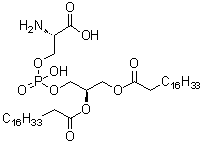
Distearoylphosphatidylserine (DSPS) is a phospholipid compound that is widely used in various scientific fields, particularly in the study of cell membranes, membrane proteins, and biophysical processes. It is a synthetic derivative of phosphatidylserine, where the fatty acid chains at the sn-1 and sn-2 positions of the glycerol backbone are replaced with two stearic acid molecules, each containing 18 carbon atoms. This modification gives DSPS distinct properties compared to naturally occurring phosphatidylserine, particularly in terms of its hydrophobicity and stability in various experimental conditions.
The discovery of distearoylphosphatidylserine can be traced to early research in lipid biochemistry, where scientists sought to understand the structure and function of phospholipids in biological membranes. Phosphatidylserine itself is a naturally occurring phospholipid that plays an important role in the function of cell membranes, particularly in processes such as apoptosis, cell signaling, and membrane trafficking. By replacing the fatty acids with stearic acid in DSPS, researchers were able to investigate the behavior of phosphatidylserine in more controlled conditions, providing insights into membrane dynamics and the impact of different fatty acids on membrane properties.
One of the primary applications of distearoylphosphatidylserine is in membrane model systems, such as lipid bilayers and liposomes. These systems are often used to study the properties of biological membranes in vitro. DSPS is particularly useful for studying the interactions between lipids and membrane proteins due to its stability and its ability to form ordered structures in lipid bilayers. The stearoyl chains in DSPS promote the formation of highly ordered, less fluid membranes, which are useful for studying membrane protein conformations and dynamics, as well as the behavior of various bioactive molecules in membrane environments.
Another key application of DSPS is in drug delivery systems. The compound is often incorporated into liposomes used to encapsulate and deliver therapeutic agents, including drugs, RNA, and proteins. The inclusion of DSPS in liposomal formulations enhances the stability and fluidity of the lipid bilayer, which can improve the controlled release and targeted delivery of drugs. DSPS-containing liposomes have been studied in the context of cancer therapy, where they are used to enhance the bioavailability and efficacy of chemotherapy drugs. Additionally, DSPS has been investigated for its potential role in the development of vaccines, as it can help to improve the presentation of antigens and increase the effectiveness of immune responses.
In addition to its applications in drug delivery and membrane studies, DSPS is also used in the preparation of vesicles and in the study of membrane fusion. By altering the properties of lipid bilayers, DSPS enables researchers to investigate how membranes fuse, which is a process important for various cellular activities, including endocytosis and viral entry. The synthetic nature of DSPS allows for the manipulation of membrane composition, making it an ideal tool for researchers studying membrane-associated phenomena.
Distearoylphosphatidylserine also finds applications in the field of biotechnology. Its use in liposomal formulations for gene therapy has been explored as a means to facilitate the delivery of genetic material into cells. In this context, DSPS enhances the ability of liposomes to fuse with cell membranes, promoting the efficient transfer of DNA or RNA into target cells.
In conclusion, distearoylphosphatidylserine is a versatile phospholipid compound that plays a crucial role in membrane model systems, drug delivery, and membrane fusion studies. Its synthetic nature allows for greater control over membrane properties, making it an invaluable tool for researchers in biochemistry, pharmacology, and biotechnology. As scientific research continues to advance, DSPS is likely to be employed in new and innovative ways, particularly in areas such as nanomedicine and targeted drug delivery.
References
Edra Dodbiba, Chengdong Xu, Tharanga Payagala, Eranda Wanigasekara, Myeong Hee Moon and Daniel W. Armstrong. Use of ion pairing reagents for sensitive detection and separation of phospholipids in the positive ion mode LC-ESI-MS, Analyst, 2011, 136, 1586.
|




 GHS07 Warning Details
 chemBlink Chemical Story