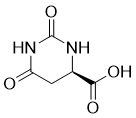
D-Hydroorotic acid, also known as (R)-Hydroorotic acid, is a key intermediate in the biosynthesis of pyrimidines, which are essential building blocks of nucleic acids like DNA and RNA. Its chemical structure is similar to that of L-hydroorotic acid, but it differs in the stereochemistry of the molecule, with the D-configuration representing the mirror image of the more biologically common L-form. This stereoisomer is less frequently found in nature but has gained importance in biochemical research due to its role in studying stereochemical properties and enzyme selectivity.
The discovery of D-hydroorotic acid arose from the broader study of pyrimidine biosynthesis pathways in living organisms. Pyrimidines, such as uracil and cytosine, are synthesized through a series of enzymatic reactions, one of which involves the conversion of dihydroorotate to orotic acid. While the L-form is commonly integrated into biological systems, the D-form offers insights into how enzymes discriminate between different stereoisomers of a molecule, which is crucial in understanding enzyme-substrate interactions and the specificity of metabolic pathways.
In scientific research, D-hydroorotic acid serves as a tool to explore stereospecific enzymatic reactions. It is used in enzymology studies to investigate how enzymes involved in pyrimidine metabolism, such as dihydroorotate dehydrogenase, recognize and process specific stereoisomers. By comparing the behavior of D- and L-hydroorotic acid in these reactions, researchers can gain insights into the mechanisms that govern stereochemical preference in biochemical processes.
D-Hydroorotic acid also finds application in the development of enzyme inhibitors. Since pyrimidine metabolism is a critical pathway for cell proliferation, particularly in rapidly dividing cells such as cancer cells, enzymes like dihydroorotate dehydrogenase have become targets for anticancer and immunosuppressive drugs. Understanding how D-hydroorotic acid interacts with these enzymes can lead to the design of more effective inhibitors by revealing potential binding sites and pathways that could be exploited to block pyrimidine biosynthesis in disease states.
In addition to its role in fundamental biochemical research, D-hydroorotic acid is also employed in synthetic organic chemistry. Its structure allows it to serve as a starting material or intermediate in the synthesis of more complex heterocyclic compounds. These compounds often exhibit biological activity, and their synthesis can lead to the development of new pharmaceuticals, particularly those targeting nucleotide metabolism.
Overall, D-hydroorotic acid is an important substance in the fields of biochemistry and pharmacology, providing valuable insights into stereochemistry and enzyme function, while also contributing to the development of therapeutic agents that target pyrimidine metabolism.
|




 GHS07 Warning Details
 chemBlink Chemical Story