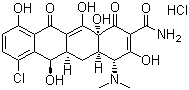
Demeclocycline hydrochloride, with the molecular formula C21H21ClN2O8·HCl and CAS number 64-73-3, is a tetracycline-class antibiotic used in the treatment of bacterial infections and as a therapeutic agent for syndrome of inappropriate antidiuretic hormone secretion (SIADH). It is a semi-synthetic derivative of chlortetracycline, characterized by the absence of a methyl group at the 6-position. Its discovery and applications are well-documented in the literature, rooted in the development of tetracycline antibiotics for combating bacterial resistance.
The discovery of demeclocycline hydrochloride emerged in the 1950s as part of efforts to expand the tetracycline family, following the introduction of tetracycline in 1953 by Pfizer. Researchers at Lederle Laboratories (now part of Pfizer) identified demeclocycline in 1957 through fermentation of a mutant strain of Streptomyces aureofaciens, the same bacterium used to produce chlortetracycline. Chemical modification of chlortetracycline by demethylation at the 6-position yielded demeclocycline, which exhibited improved stability and a longer half-life compared to its parent compound. Its hydrochloride salt form was developed to enhance solubility and bioavailability for oral administration. The discovery addressed the need for broad-spectrum antibiotics effective against Gram-positive and Gram-negative bacteria, particularly in the context of emerging resistance to penicillin. By the early 1960s, demeclocycline was marketed under the brand name Declomycin, with its unique ability to induce diuresis in SIADH recognized later in clinical practice.
Synthetically, demeclocycline hydrochloride is produced via fermentation of Streptomyces aureofaciens in a nutrient-rich medium containing glucose, ammonium salts, and trace minerals. The bacterium is cultured aerobically, and the crude antibiotic is extracted from the broth using organic solvents like butanol, followed by purification through ion-exchange chromatography and crystallization. The demethylation at the 6-position occurs naturally in mutant strains or is induced by controlling fermentation conditions, such as pH and oxygen levels. The purified demeclocycline is converted to its hydrochloride salt by treatment with hydrochloric acid, forming a yellow crystalline powder suitable for pharmaceutical formulations. While total chemical synthesis of tetracyclines is possible, involving complex stereoselective assembly of the naphthacene core, fermentation remains the primary method due to its cost-effectiveness and scalability. These processes rely on established protocols in microbial biotechnology and antibiotic purification.
The primary application of demeclocycline hydrochloride is as an antibiotic for treating bacterial infections, including respiratory tract infections, urinary tract infections, acne, and Lyme disease caused by susceptible organisms like Streptococcus, Staphylococcus, Escherichia coli, and Borrelia burgdorferi. It inhibits bacterial protein synthesis by binding to the 30S ribosomal subunit, preventing aminoacyl-tRNA attachment. Its broad-spectrum activity and oral bioavailability make it effective for outpatient therapy. Additionally, demeclocycline is uniquely used to treat SIADH, a condition characterized by excessive antidiuretic hormone leading to water retention and hyponatremia. By inhibiting the renal response to antidiuretic hormone, demeclocycline promotes water excretion, correcting sodium imbalances. This diuretic effect, discovered in the 1970s, is attributed to its interference with cyclic AMP-mediated aquaporin expression in the collecting ducts.
In academic research, demeclocycline hydrochloride is studied for its pharmacokinetics, resistance mechanisms, and off-label applications. Its photosensitizing properties, causing skin reactions upon UV exposure, are investigated to understand tetracycline phototoxicity. The compound’s significance lies in its dual role as an antibiotic and a therapeutic agent for SIADH, reflecting progress in tetracycline chemistry and clinical pharmacology. By addressing bacterial infections and specific endocrine disorders, demeclocycline hydrochloride remains a valuable tool in infectious disease and nephrology.
References
1958. Demethylchlortetracycline; a new tetracycline antibiotic that yields greater and more sustained antibacterial activity. The New England Journal of Medicine, 259(21).
DOI: 10.1056/nejm195811202592102
2020. Demeclocycline Reduces the Growth of Human Brain Tumor-Initiating Cells: Direct Activity and Through Monocytes. Frontiers in Immunology, 11.
DOI: 10.3389/fimmu.2020.00272
2022. Neuroprotective Effects of a Novel Demeclocycline Derivative Lacking Antibiotic Activity: From a Hit to a Promising Lead Compound. Cells, 11(17).
DOI: 10.3390/cells11172759
|





 GHS07;GHS08 Warning Details
 chemBlink Chemical Story