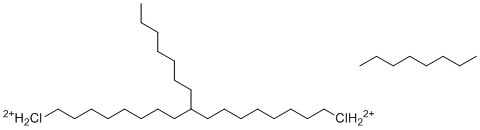
Di-C8–C10-alkyldimethylammonium chloride is a quaternary ammonium compound (QAC) characterized by a nitrogen atom bonded to two medium-length alkyl chains (typically 8–10 carbon atoms), two methyl groups, and a chloride counterion. This class of compounds was developed during the mid-20th century as part of efforts to create effective antimicrobial agents and cationic surfactants. The combination of hydrophobic alkyl chains and a positively charged nitrogen center gives the molecule surface-active properties and the ability to disrupt microbial cell membranes, leading to broad-spectrum antimicrobial activity.
The primary application of di-C8–C10-alkyldimethylammonium chloride is as a disinfectant and sanitizer. Its cationic nature allows strong interaction with negatively charged bacterial, fungal, and viral cell membranes, causing membrane disruption and cell death. It is widely used in industrial, institutional, and household cleaning products, including surface disinfectants, sanitizers, and hard-surface cleaners. The compound’s rapid antimicrobial action and effectiveness at relatively low concentrations make it a reliable component in hygiene protocols for healthcare facilities, food processing environments, and public areas.
In addition to its disinfectant properties, this compound serves as a cationic surfactant and conditioning agent in personal care and cosmetic products. It is used in shampoos, conditioners, and lotions for its ability to adhere to negatively charged hair and skin surfaces. The molecule reduces static electricity, improves combability, enhances smoothness, and contributes to overall product feel. Its compatibility with other surfactants and emulsifiers allows incorporation into a variety of formulations without compromising performance.
Di-C8–C10-alkyldimethylammonium chloride also finds applications in industrial processes. It is used as a fabric softener, antistatic agent, and emulsifier in textiles, helping to improve fiber softness, reduce static, and stabilize emulsions. In water treatment and chemical processing, it can act as a flocculant or dispersing agent, optimizing surface interactions and improving operational efficiency.
Environmental and safety considerations are critical in the use of this quaternary ammonium compound. It is toxic to aquatic organisms and requires careful handling, controlled use, and proper wastewater treatment. Exposure to concentrated solutions can cause irritation to the skin, eyes, and respiratory system, so protective measures are necessary during handling and application. Its biodegradability is moderate, and formulations are designed to minimize environmental impact while maintaining antimicrobial efficacy.
The development and utilization of di-C8–C10-alkyldimethylammonium chloride demonstrate the practical application of quaternary ammonium chemistry. Its combination of broad-spectrum antimicrobial activity, surface-active properties, and conditioning ability has made it a versatile ingredient in disinfectants, personal care products, textiles, and industrial formulations, highlighting the enduring value of medium-chain quaternary ammonium compounds in modern chemical applications.
|




 chemBlink Chemical Story