
Online Database of Chemicals from Around the World
| Shanghai Longschem Co., Ltd. | China | |||
|---|---|---|---|---|
 | www.longschem.com | |||
 | +86 (21) 3635-6756 | |||
 | +86 (21) 3656-6757 | |||
 | charles-hu@longschem.com | |||
| Chemical manufacturer | ||||
| chemBlink Standard supplier since 2007 | ||||
| Fujian South Pharmaceutical Co., Ltd. | China | |||
|---|---|---|---|---|
| www.southpharma.com | |||
| +86 (598) 286-0412 +86 13509335186 | |||
| +86 (598) 286-0416 | |||
| sales@southpharma.com | |||
 | QQ Chat | |||
| Chemical manufacturer since 2001 | ||||
| chemBlink Standard supplier since 2008 | ||||
| Manus Aktteva | India | |||
|---|---|---|---|---|
| www.manusaktteva.in | |||
| +91 (79) 6512-3395 | |||
| +91 (79) 2646-3395 | |||
| products@manusakttevabiopharma.in | |||
| Chemical distributor | ||||
| chemBlink Standard supplier since 2008 | ||||
| Beijing Huikang Boyuan Chemical Tech Co., Ltd. | China | |||
|---|---|---|---|---|
| www.huikangchem.com | |||
| +86 (10) 6886-2197 6886-7502 | |||
| +86 (10) 6888-2204 | |||
| market@huikangchem.com sales@huikangchem.com sales3@huikangchem.com | |||
| QQ Chat | |||
| Chemical manufacturer since 2005 | ||||
| chemBlink Standard supplier since 2008 | ||||
| Taizhou Crene Biotechnology Co., Ltd. | China | |||
|---|---|---|---|---|
| www.pharm-intermediates.com | |||
| +86 (576) 8881-3233 8820-5808 +86 13396860566 | |||
| +86 (576) 8822-9589 | |||
| sales@pharm-intermediates.com | |||
| QQ Chat | |||
| Chemical manufacturer since 2011 | ||||
| chemBlink Standard supplier since 2009 | ||||
| Beijing Mesochem Technology Co., Ltd. | China | |||
|---|---|---|---|---|
| www.mesochem.com | |||
| +86 (10) 5786-2036 57862181 67374028 +86 13366977697 | |||
| +86 (10) 5786-2181 | |||
| sales@mesochem.com huafenginfo@126.com | |||
| QQ Chat | |||
| Chemical manufacturer since 2009 | ||||
| chemBlink Standard supplier since 2010 | ||||
| Hefei TNJ Chemical Industry Co., Ltd. | China | |||
|---|---|---|---|---|
| www.tnjchem.com | |||
| +86 (551) 6541-8684 | |||
| +86 (551) 6541-8697 | |||
| sales@tnjchem.com | |||
| Chemical manufacturer since 2001 | ||||
| chemBlink Standard supplier since 2010 | ||||
| VIVAN Life Sciences Pvt. Ltd. | India | |||
|---|---|---|---|---|
| www.vivanls.com | |||
| +91 (22) 2544-4584 | |||
| +91 (22) 2544-4588 | |||
| vivan@vivanls.com | |||
| Chemical manufacturer | ||||
| chemBlink Standard supplier since 2010 | ||||
| BOC Sciences | USA | |||
|---|---|---|---|---|
| www.bocsci.com | |||
| +1 (631) 485-4226 | |||
| +1 (631) 614-7828 | |||
| info@bocsci.com | |||
| Chemical manufacturer | ||||
| chemBlink Standard supplier since 2010 | ||||
| Hunan Chemapi Biological Technology Co., Ltd. | China | |||
|---|---|---|---|---|
| www.chemapi.com.cn | |||
| +86 (731) 8971-4511 | |||
| +86 (731) 8971-4511 | |||
| sales@chemapi.com.cn | |||
| QQ Chat | |||
| Chemical manufacturer since 2012 | ||||
| chemBlink Standard supplier since 2013 | ||||
| Selleck Chemicals LLC | USA | |||
|---|---|---|---|---|
| www.selleckchem.com | |||
| +1 (713) 535-9129 | |||
| +1 (832) 582-8590 | |||
| info@selleckchem.com | |||
| Chemical manufacturer | ||||
| chemBlink Standard supplier since 2014 | ||||
| Eastar Chemical Corporation | USA | |||
|---|---|---|---|---|
| www.eastarchem.com | |||
| +1 800-898-2436 | |||
| +1 (877) 898-2436 | |||
| info@eastarchem.com | |||
| Chemical manufacturer since 1989 | ||||
| chemBlink Standard supplier since 2014 | ||||
| Hangzhou Leap Chem Co., Ltd. | China | |||
|---|---|---|---|---|
| www.leapchem.com | |||
| +86 (571) 8771-1850 | |||
| market19@leapchem.com | |||
| QQ Chat | |||
| Chemical manufacturer since 2006 | ||||
| chemBlink Standard supplier since 2015 | ||||
| Amadis Chemical Co., Ltd. | China | |||
|---|---|---|---|---|
| www.amadischem.com | |||
| +86 (571) 8992-5085 | |||
| +86 (571) 8992-5065 | |||
| sales@amadischem.com | |||
| Chemical manufacturer since 2010 | ||||
| chemBlink Standard supplier since 2015 | ||||
| Carbosynth China Ltd. | China | |||
|---|---|---|---|---|
| www.carbosynth.cn | |||
| +86 (512) 6260-5585 | |||
| +86 (512) 6260-5576 | |||
| sales@carbosynth.com | |||
| QQ Chat | |||
| Chemical manufacturer since 2006 | ||||
| chemBlink Standard supplier since 2016 | ||||
| Kessie Chemical Co., Ltd. | China | |||
|---|---|---|---|---|
| www.kessiechem.com | |||
| +86 (519) 8698-7916 +86 15851999766 | |||
| +86 (519) 8690-8212 | |||
| info@kessiechem.com | |||
| QQ Chat | |||
 | Skype Chat | |||
| Chemical manufacturer since 2006 | ||||
| chemBlink Standard supplier since 2018 | ||||
| Haorui Enterprises Co., Ltd. | China | |||
|---|---|---|---|---|
| www.haorui.com | |||
| +86 (755) 8296-0263 | |||
| lena@haorui.com | |||
| Chemical manufacturer since 1997 | ||||
| chemBlink Standard supplier since 2020 | ||||
| Targetmol China | China | |||
|---|---|---|---|---|
| www.targetmol.cn | |||
| +86 (400) 820-0310 | |||
| sales@targetmol.cn | |||
| Chemical manufacturer since 2015 | ||||
| chemBlink Standard supplier since 2025 | ||||
| Kemprotec Limited | UK | |||
|---|---|---|---|---|
| www.kemprotec.com | |||
| +44 (1642) 591-764 | |||
| +44 (1845) 550-001 | |||
| sales@kemprotec.co.uk | |||
| Chemical distributor since 1998 | ||||
| Huzhou Hengyuan Biochem. Tech. Co., Ltd. | China | |||
|---|---|---|---|---|
| www.hengyuanpharm.com | |||
| +86 (572) 211-6303 260-7156 260-7159 | |||
| +86 (572) 260-7155 | |||
| info@hengyuanpharm.com | |||
| QQ Chat | |||
| Chemical manufacturer since 2004 | ||||
| LKT Laboratories, Inc. | USA | |||
|---|---|---|---|---|
| www.lktlabs.com | |||
| +1 (888) 558-5227 | |||
| +1 (651) 644-8357 | |||
| peacerli@mbolin-lktlabs.com | |||
| Chemical manufacturer | ||||
| VDM Biochemicals | USA | |||
|---|---|---|---|---|
| www.vdmbio.com | |||
| +1 (330) 252-8181 | |||
| +1 (330) 252-8171 | |||
| sales@vdmbio.com info@vdmbio.com | |||
| Chemical manufacturer | ||||
| Classification | API >> Antineoplastic agents >> Antimetabolite antineoplastic |
|---|---|
| Name | Temozolomide |
| Synonyms | 4-Methyl-5-oxo-2,3,4,6,8-pentazabicyclo[4.3.0]nona-2,7,9-triene-9-carboxamide |
| Molecular Structure | 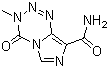 |
| Molecular Formula | C6H6N6O2 |
| Molecular Weight | 194.15 |
| CAS Registry Number | 85622-93-1 |
| EC Number | 630-358-9 |
| SMILES | CN1C(=O)N2C=NC(=C2N=N1)C(=O)N |
| Density | 2.0±0.1 g/cm3 Calc.* |
|---|---|
| Melting point | 212 °C (Decomposes) (Expl.) |
| Boiling point | 526.6±42.0 °C 760 mmHg (Calc.)* |
| Flash point | 272.3±27.9 °C (Calc.)* |
| Solubility | 50 mM in DMSO (Expl.) |
| Index of refraction | 1.895 (Calc.)* |
| * | Calculated using Advanced Chemistry Development (ACD/Labs) Software. |
| Hazard Symbols |    GHS06;GHS07;GHS08 Danger Details GHS06;GHS07;GHS08 Danger Details | ||||||||||||||||||||||||||||||||||||||||||||||||||||||||||||||||||||||||||||||||||||||||||||||||||||||||||||
|---|---|---|---|---|---|---|---|---|---|---|---|---|---|---|---|---|---|---|---|---|---|---|---|---|---|---|---|---|---|---|---|---|---|---|---|---|---|---|---|---|---|---|---|---|---|---|---|---|---|---|---|---|---|---|---|---|---|---|---|---|---|---|---|---|---|---|---|---|---|---|---|---|---|---|---|---|---|---|---|---|---|---|---|---|---|---|---|---|---|---|---|---|---|---|---|---|---|---|---|---|---|---|---|---|---|---|---|---|---|
| Risk Statements | H204-H300-H302-H315-H319-H335-H340-H341-H350-H351-H360-H372 Details | ||||||||||||||||||||||||||||||||||||||||||||||||||||||||||||||||||||||||||||||||||||||||||||||||||||||||||||
| Safety Statements | P203-P210-P230-P234-P236-P240-P250-P260-P261-P264-P264+P265-P270-P271-P280-P301+P316-P301+P317-P302+P352-P304+P340-P305+P351+P338-P318-P319-P321-P330-P332+P317-P337+P317-P362+P364-P370+P380+P375-P401-P403+P233-P405-P501-P503 Details | ||||||||||||||||||||||||||||||||||||||||||||||||||||||||||||||||||||||||||||||||||||||||||||||||||||||||||||
| Hazard Classification | |||||||||||||||||||||||||||||||||||||||||||||||||||||||||||||||||||||||||||||||||||||||||||||||||||||||||||||
| |||||||||||||||||||||||||||||||||||||||||||||||||||||||||||||||||||||||||||||||||||||||||||||||||||||||||||||
| SDS | Available | ||||||||||||||||||||||||||||||||||||||||||||||||||||||||||||||||||||||||||||||||||||||||||||||||||||||||||||
 chemBlink Chemical Story
|
Temozolomide is an oral alkylating agent that has become a central component in the treatment of certain brain cancers, particularly glioblastoma multiforme and anaplastic astrocytoma. It is classified as an imidazotetrazine derivative and is chemically related to the older alkylating agent dacarbazine. Temozolomide was developed to improve therapeutic efficacy while offering better pharmacokinetic properties, including oral bioavailability and central nervous system (CNS) penetration, which are critical for treating brain tumors. Temozolomide was first synthesized in the early 1980s at Aston University in Birmingham, United Kingdom. The development was led by a group of researchers who were exploring new compounds with antitumor activity that could be administered orally and cross the blood-brain barrier. Unlike many traditional chemotherapeutic agents that require intravenous administration and are limited by poor CNS access, temozolomide demonstrated the ability to reach therapeutic concentrations in the brain following oral administration, which significantly contributed to its clinical utility in neuro-oncology. The drug acts primarily by methylating DNA at the O6 and N7 positions of guanine residues. This methylation results in DNA mismatches during replication, ultimately leading to cell cycle arrest and apoptosis in rapidly dividing tumor cells. The most critical cytotoxic lesion caused by temozolomide is the O6-methylguanine adduct. The ability of tumor cells to repair this lesion via the DNA repair enzyme O6-methylguanine-DNA methyltransferase (MGMT) plays a key role in determining sensitivity to the drug. Tumors with low MGMT expression or with epigenetic silencing of the MGMT gene are generally more responsive to temozolomide therapy. Temozolomide received accelerated approval from regulatory agencies in the early 2000s based on its efficacy and tolerability in clinical trials. It has since been established as the standard of care for newly diagnosed glioblastoma when used in combination with radiotherapy and continued as maintenance therapy. This treatment regimen, known as the Stupp protocol, has been shown to improve both progression-free and overall survival compared to radiotherapy alone. In addition to glioblastoma, temozolomide has also been used in the treatment of other malignant gliomas and metastatic melanoma. Its utility is currently being evaluated in a range of other CNS tumors and some systemic cancers. Research is ongoing to explore the potential benefits of combining temozolomide with other therapeutic modalities, including immunotherapy and targeted agents, to overcome resistance mechanisms and enhance treatment efficacy. Temozolomide is typically well tolerated relative to other chemotherapeutic agents, with a manageable side effect profile. Common adverse effects include nausea, vomiting, fatigue, myelosuppression, and increased risk of infections. Prophylactic treatment may be recommended to prevent opportunistic infections in patients undergoing prolonged therapy. The success of temozolomide has spurred interest in the design of other small-molecule chemotherapeutics with favorable oral bioavailability and CNS penetration. It serves as a model compound in drug development for brain tumors and remains an important subject of ongoing research focused on improving outcomes in patients with high-grade gliomas. The pharmacological and therapeutic significance of temozolomide has been firmly established through decades of clinical research and practical application. Its development marked a major advance in neuro-oncology, particularly due to its unique ability to treat tumors within the CNS effectively through systemic administration. References 1991. Comparison of the cytotoxicity in vitro of temozolomide and dacarbazine, prodrugs of 3-methyl-(triazen-1-yl)imidazole-4-carboxamide. Cancer Chemotherapy and Pharmacology, 28(4). DOI: 10.1007/bf00688855 2005. Benefit of Temozolomide Compared to Procarbazine in Treatment of Glioblastoma Multiforme at First Relapse: Effect on Neurological Functioning, Performance Status, and Health Related Quality of Life. Cancer Investigation, 23(2). DOI: 10.1081/cnv-200050453 2024. Cytarabine/methotrexate. Reactions Weekly. DOI: 10.1007/s40278-024-55154-4 |
| Market Analysis Reports |