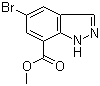
Methyl 5-bromo-1H-indazole-7-carboxylate is an organic compound that belongs to the indazole class of heterocyclic compounds. It is characterized by a bromine atom at the 5-position and a carboxylate ester group at the 7-position of the indazole ring. The chemical formula for methyl 5-bromo-1H-indazole-7-carboxylate is C8H6BrNO2. The indazole scaffold, a fused bicyclic structure containing both nitrogen and carbon atoms, is known for its presence in many bioactive natural products and synthetic pharmaceuticals. This particular compound has garnered attention in research for its unique combination of structural features that offer both reactivity and biological activity.
The discovery of methyl 5-bromo-1H-indazole-7-carboxylate stems from the broader interest in indazole derivatives, which have been studied since the mid-20th century. Indazole itself is a key structure in medicinal chemistry due to its versatility in pharmacological applications. Researchers have recognized that modifications to the indazole ring, particularly through the introduction of halogens and functional groups, can significantly alter the compound’s reactivity and biological properties. The introduction of the bromo group at the 5-position of the indazole ring in methyl 5-bromo-1H-indazole-7-carboxylate, along with the carboxylate ester group at the 7-position, positions it as a useful compound for further chemical derivatization and as a potential lead compound for drug development.
Methyl 5-bromo-1H-indazole-7-carboxylate is primarily employed as an intermediate in the synthesis of bioactive molecules. The bromine atom at the 5-position enhances the electrophilic nature of the compound, facilitating reactions like nucleophilic substitution and cross-coupling, which are crucial for building more complex molecular structures. These synthetic routes are useful for the development of pharmaceuticals and biologically active compounds. As such, methyl 5-bromo-1H-indazole-7-carboxylate has been explored as a starting material in the synthesis of novel indazole derivatives with potential anticancer, antimicrobial, and anti-inflammatory activities.
The compound has also found applications in the development of drug candidates targeting various diseases. Due to its ability to modulate biological pathways, methyl 5-bromo-1H-indazole-7-carboxylate has been investigated in the context of cancer treatment, where indazole derivatives are known to interact with key molecular targets involved in cancer cell proliferation and survival. The ability of this compound to form derivatives with enhanced activity makes it a valuable component in drug discovery efforts.
Additionally, methyl 5-bromo-1H-indazole-7-carboxylate has potential applications in the field of agrochemicals. Its structure is similar to that of many bioactive molecules used in plant protection, and research has indicated that indazole derivatives, including methyl 5-bromo-1H-indazole-7-carboxylate, could be further modified to develop new pesticides or herbicides. The compound’s versatility in terms of functional group modifications enables the creation of agrochemicals that can specifically target plant pathogens or pests, offering a new direction for agricultural chemistry.
In conclusion, methyl 5-bromo-1H-indazole-7-carboxylate is a promising compound in the fields of medicinal chemistry, agrochemicals, and synthetic organic chemistry. Its unique structure and functional groups make it a valuable intermediate for the development of biologically active compounds with applications in disease treatment and agricultural protection.
|




 GHS07 Warning Details
 chemBlink Chemical Story