Pepsin is a proteolytic enzyme produced in the stomach as part of the digestive system. It is synthesized and secreted by the gastric chief cells in an inactive zymogen form known as pepsinogen, which is then activated to pepsin under acidic conditions, typically at a pH of 1.5 to 2. The enzyme is highly specific for cleaving peptide bonds, particularly those adjacent to aromatic amino acids such as phenylalanine, tyrosine, and tryptophan, enabling the breakdown of proteins into smaller peptides for subsequent digestion in the small intestine. Pepsin was first discovered in the early 19th century during studies of gastric juice and has since been extensively characterized, providing a foundational understanding of protein digestion in mammals.
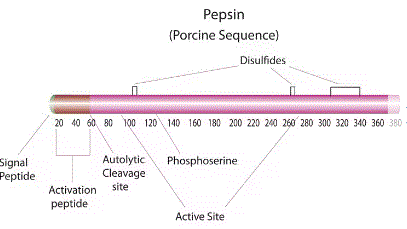
Pepsin belongs to the class of aspartic proteases, which contain two critical aspartic acid residues in their active site that participate directly in the hydrolysis of peptide bonds. Its three-dimensional structure consists of a predominantly beta-sheet framework with a central active site cleft that accommodates substrate proteins. The enzyme is active under highly acidic conditions, which both facilitates catalysis and prevents microbial contamination. Its stability and activity profile make pepsin a model enzyme for studying mechanisms of acid proteolysis and the structure–function relationships of aspartic proteases.
In pharmaceutical and nutritional applications, pepsin is widely used as a digestive aid to supplement individuals with impaired protein digestion, such as in cases of hypochlorhydria or exocrine pancreatic insufficiency. Commercial pepsin preparations are typically derived from porcine or bovine gastric mucosa and are standardized based on enzymatic activity rather than mass. These preparations may be formulated as powders, tablets, or liquid extracts for oral administration, often in combination with other enzymes or antacids to optimize digestive function.
Beyond its role in human digestion, pepsin has been applied in laboratory and industrial settings. In protein chemistry and biochemistry, pepsin is used for limited proteolysis to generate peptide fragments for structural analysis or to facilitate mass spectrometry studies. Its specificity allows controlled cleavage of proteins at defined sites, which is valuable for mapping protein domains or producing antigenic peptides. Industrially, pepsin is used in cheese production, meat tenderization, and other food processing applications where selective protein hydrolysis enhances texture or flavor. The enzyme’s ability to function under acidic conditions is particularly advantageous in processes where neutral or basic proteases would be less effective.
The enzyme has also been utilized in research into enzyme kinetics, protein folding, and inhibitor design. Studies of pepsin have provided insights into substrate specificity, catalytic mechanisms, and the effects of pH and temperature on enzyme activity. These findings have informed the development of inhibitors targeting aspartic proteases, which have relevance in treating conditions such as viral infections and gastrointestinal disorders. Pepsin has served as a prototype for understanding the broader family of acid proteases found in humans, animals, and microorganisms.
Physically, pepsin is generally supplied as a stable powder with high enzymatic activity that can be stored under dry, cool conditions. It retains activity upon rehydration in acidic buffers and exhibits maximal proteolytic activity at low pH. Care is taken to avoid prolonged exposure to neutral or basic environments, which can irreversibly denature the protein. The enzyme’s activity can also be preserved in freeze-dried preparations for extended storage.
Overall, pepsin is a key digestive enzyme essential for protein catabolism in the stomach and serves as a valuable tool in biochemistry, pharmacology, and industrial applications. Its specificity for peptide bonds adjacent to aromatic residues, stability under acidic conditions, and well-characterized enzymatic properties make it a cornerstone in the study of proteolysis and in the development of enzyme-based products.
References
2017. Is Pepsin a Reliable Marker of Laryngopharyngeal Reflux? A Systematic Review. Otolaryngology--head and neck surgery, 157(6).
DOI: 10.1177/0194599817709430
2015. Investigation of pepsin in tears of children with laryngopharyngeal reflux disease. International Journal of Pediatric Otorhinolaryngology, 79(12).
DOI: 10.1016/j.ijporl.2015.10.034
|





 GHS07;GHS08 Danger Details
 chemBlink Chemical Story