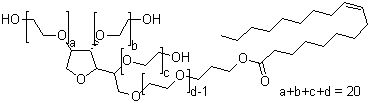
Tween 80, also known by its chemical name polysorbate 80, is a nonionic surfactant and emulsifier widely used in pharmaceutical, food, cosmetic, and biochemical applications. It is synthesized by the polyethoxylation of sorbitan monooleate, which involves the reaction of sorbitan (a derivative of sorbitol) with oleic acid, followed by the addition of polyoxyethylene groups. The result is a hydrophilic compound capable of stabilizing oil-in-water emulsions by reducing surface and interfacial tension.
Tween 80 was introduced in the mid-20th century as part of a group of surfactants developed to improve the stability and bioavailability of various formulations. Its amphiphilic structure, which includes both hydrophilic polyethylene glycol groups and a lipophilic oleic acid tail, allows it to interact with both aqueous and lipid environments. This property is critical in emulsifying hydrophobic substances in aqueous solutions, a requirement in numerous industrial and laboratory applications.
In the pharmaceutical industry, Tween 80 is commonly used as a solubilizing agent in injectable and oral medications. It improves the dissolution of poorly water-soluble drugs and ensures homogeneity in liquid formulations. It is an excipient in several injectable formulations, including vaccines, where it stabilizes active ingredients and enhances delivery. Notably, Tween 80 is used in the formulation of certain anticancer drugs and biologics to prevent aggregation or precipitation during storage and administration.
In vaccine development, Tween 80 serves as a stabilizer for emulsified antigens and helps maintain vaccine potency under varying storage conditions. It is especially valuable in protein-based or recombinant vaccines, where the maintenance of protein structure and solubility is essential for immunogenicity. Its role in the stabilization of viral vector and mRNA-based vaccines has also been studied, contributing to formulation stability and reducing adsorption to packaging materials.
In the food industry, Tween 80 functions as an emulsifier to stabilize salad dressings, sauces, and desserts. It is approved for use as a food additive in many countries and is generally recognized as safe (GRAS) by regulatory authorities such as the U.S. Food and Drug Administration. It is included in food products to maintain uniform dispersion of ingredients and prevent phase separation during shelf storage.
Tween 80 also has significant use in microbiology and biotechnology. In laboratory media, it is employed to disperse hydrophobic compounds and to increase the permeability of cell membranes in certain microbial species. It is frequently added to culture media for mycobacteria, including Mycobacterium tuberculosis, as it facilitates even bacterial growth and reduces clumping. Its surface-active properties also find utility in protein extraction protocols, where it assists in solubilizing membrane proteins or facilitating the removal of non-specific binding during assays.
In cosmetics and personal care products, Tween 80 is used to emulsify oils, fragrances, and other hydrophobic components in lotions, creams, and shampoos. Its inclusion ensures product stability and consistency, as well as improved application and skin feel. It is particularly valued for its low toxicity and mildness on the skin, making it suitable for a wide range of formulations, including those intended for sensitive skin.
Although generally considered safe, Tween 80 has been the subject of toxicological studies to assess its long-term effects and biocompatibility. At high concentrations or in sensitive individuals, it may cause mild irritation or allergic reactions. However, its widespread use across diverse industries and regulatory approval in many countries reflect its favorable safety profile when used within recommended limits.
Tween 80 remains an essential multifunctional additive in science, medicine, food, and industry due to its reliable emulsifying properties, chemical stability, and low toxicity. Its ability to interface between hydrophilic and lipophilic substances has made it indispensable in numerous formulations, contributing to advances in drug delivery, food processing, microbiology, and cosmetic product development.
References
2001. Comparison of BVDV and SFV Used as Models for Hepatitis C Virus in Virus Validation Studies. 30th Hemophilia Symposium Hamburg 1999.
DOI: 10.1007/978-3-642-18240-2_67
|




 chemBlink Chemical Story