
Online Database of Chemicals from Around the World
| Jiahua Import & Export Co., Ltd. | China | |||
|---|---|---|---|---|
 | www.jiahuachemical.com | |||
 | +86 (573) 8280-7222 | |||
 | +86 (573) 8280-7111 | |||
 | Pesticide@jiahuachemical.com | |||
| Chemical distributor | ||||
| chemBlink Standard supplier since 2006 | ||||
| Nanjing Source Chemical Co., Ltd. | China | |||
|---|---|---|---|---|
| www.source-chem.com | |||
| +86 (25) 8457-4770 | |||
| +86 (25) 8457-4773 | |||
| njagrochem@gmail.com | |||
| Chemical manufacturer | ||||
| chemBlink Standard supplier since 2007 | ||||
| Zhengzhou Zhengshi Chemical Co., Ltd. | China | |||
|---|---|---|---|---|
| www.zs-chem.cn | |||
| +86 (371) 6381-7136 | |||
| +86 (371) 6361-2752 | |||
| zhengshichem@126.com | |||
| Chemical manufacturer since 2001 | ||||
| chemBlink Standard supplier since 2008 | ||||
| Simagchem Corporation | China | |||
|---|---|---|---|---|
| www.simagchem.com | |||
| +86 13806087780 | |||
| +86 (592) 268-0237 | |||
| sale@simagchem.com | |||
| Chemical manufacturer since 2002 | ||||
| chemBlink Standard supplier since 2008 | ||||
| Hefei TNJ Chemical Industry Co., Ltd. | China | |||
|---|---|---|---|---|
| www.tnjchem.com | |||
| +86 (551) 6541-8684 | |||
| +86 (551) 6541-8697 | |||
| sales@tnjchem.com | |||
| Chemical manufacturer since 2001 | ||||
| chemBlink Standard supplier since 2010 | ||||
| Ring Specialty Chemicals Inc. | Canada | |||
|---|---|---|---|---|
| www.ringchemicals.com | |||
| +1 (416) 493-6870 | |||
| info@ringchemicals.com | |||
| Chemical distributor | ||||
| chemBlink Standard supplier since 2010 | ||||
| BOC Sciences | USA | |||
|---|---|---|---|---|
| www.bocsci.com | |||
| +1 (631) 485-4226 | |||
| +1 (631) 614-7828 | |||
| info@bocsci.com | |||
| Chemical manufacturer | ||||
| chemBlink Standard supplier since 2010 | ||||
| Ecosfarm(Guangzhou) Bio-technologies Co., Ltd. | China | |||
|---|---|---|---|---|
| www.ecosfarm.com | |||
| +86 (20) 8398-2853 | |||
| +86 (20) 8398-2837 | |||
| millyhuang@ecosfarm.com | |||
| Chemical manufacturer since 2003 | ||||
| chemBlink Standard supplier since 2015 | ||||
| Hangzhou Leap Chem Co., Ltd. | China | |||
|---|---|---|---|---|
| www.leapchem.com | |||
| +86 (571) 8771-1850 | |||
| market19@leapchem.com | |||
 | QQ Chat | |||
| Chemical manufacturer since 2006 | ||||
| chemBlink Standard supplier since 2015 | ||||
| Changzhou Jintan ChengEn Chemical Co., Ltd. | China | |||
|---|---|---|---|---|
| www.chengenchem.com | |||
| +86 (519) 8019-0155 +86 13961176135 +86 13775159780 | |||
| +86 (519) 8019-0155 | |||
| sales@chengenchem.com | |||
| QQ Chat | |||
| Chemical manufacturer since 2014 | ||||
| chemBlink Standard supplier since 2016 | ||||
| Bondchemistry Co., Ltd. | China | |||
|---|---|---|---|---|
| www.bondchemistry.com | |||
| +86 15858185835 | |||
| sales@bondchemistry.com | |||
| Chemical distributor | ||||
| chemBlink Standard supplier since 2020 | ||||
| Alchemie Shanghai Co., Ltd. | China | |||
|---|---|---|---|---|
| www.alcshanghai.com | |||
| +86 (021) 5072-0087 | |||
| assistant2@alchemie-shanghai.com | |||
| Chemical distributor since 2018 | ||||
| chemBlink Standard supplier since 2025 | ||||
| Crescent Chemical Co. Inc. | USA | |||
|---|---|---|---|---|
| www.crescentchemical.com | |||
| +1 (631) 348-0333 | |||
| +1 (631) 348-0913 | |||
| crescent@creschem.com | |||
| Chemical distributor | ||||
| Hangzhou Dayoo Co., Ltd. | China | |||
|---|---|---|---|---|
| www.dayoochem.com | |||
| +86 (571) 8583-3303 | |||
| +86 (571) 8586-5553 | |||
| dayoochem@163.com | |||
| Chemical manufacturer | ||||
| Shandong Weifang Rainbow Chemical Co., Ltd. | China | |||
|---|---|---|---|---|
| www.rainbowchem.com | |||
| +86 (531) 8887-5221 8887-5230 8887-5227 | |||
| +86 (531) 8887-5224 / 8887-5232 | |||
| rainbowchem@rainbowchem.com | |||
| Chemical manufacturer since 2005 | ||||
| Melford Laboratories Limited | UK | |||
|---|---|---|---|---|
| www.melford.co.uk | |||
| +44 (1449) 741-178 | |||
| +44 (1449) 741-217 | |||
| pfranklin@melford.co.uk sales@melford.co.uk | |||
| Chemical manufacturer since 1985 | ||||
| Molekula Ltd | UK | |||
|---|---|---|---|---|
| www.molekula.com | |||
| +44 (1747) 831-066 | |||
| +44 (1747) 831-199 | |||
| info@molekula.com | |||
| Chemical manufacturer | ||||
| Frontier Scientific Services, Inc. | USA | |||
|---|---|---|---|---|
| www.frontierssi.com | |||
| +1 (302) 266-6891 (888) 577-2734 | |||
| +1 (302) 266-8296 | |||
| customerservice@frontierssi.com | |||
| Chemical manufacturer | ||||
| Cayman Chemical Company | USA | |||
|---|---|---|---|---|
| www.caymanchem.com | |||
| +1 (734) 971-3335 | |||
| +1 (734) 971-3640 | |||
| sales@caymanchem.com | |||
| Chemical manufacturer | ||||
| AccuStandard Inc. | USA | |||
|---|---|---|---|---|
| www.accustandard.com | |||
| +1 (203) 786-5290 | |||
| +1 (203) 786-5287 | |||
| orders@accustandard.com | |||
| Chemical manufacturer since 1986 | ||||
| Toronto Research Chemicals Inc. | Canada | |||
|---|---|---|---|---|
| www.trc-canada.com | |||
| +1 (416) 665-9696 | |||
| +1 (416) 665-4439 | |||
| info@trc-canada.com | |||
| Chemical manufacturer since 1982 | ||||
| Shenzhen Baocheng Chemical Industry Co., Ltd. | China | |||
|---|---|---|---|---|
| www.baochengagro.com | |||
| +86 (755) 8219-2178 | |||
| +86 (755) 8219-2559 | |||
| bci@vip.163.com | |||
| Chemical manufacturer | ||||
| Changzhou Suntton Co., Ltd. | USA | |||
|---|---|---|---|---|
| www.suntton.com | |||
| +1 (914) 965-2077 +86 (519) 8513-6089 | |||
| +1 (914) 375-2093 / +86 (519) 8513-6133 | |||
| luke.verdet@suntton.com lily.chen@suntton.com | |||
| Chemical manufacturer | ||||
| Classification | Biochemical >> Amino acids and their derivatives >> Threonine derivative |
|---|---|
| Name | 2,4-Dichlorophenoxyacetic acid |
| Synonyms | Amidox; B-Selektonon; U-5043; Crotilin; Decamine; Dicopur; Dicotox; Ipaner; Netagrone; Pennamine; Weedone-2,4-DP; Helena 2,4-D; 2,4-D LV6; Weedar 64A; Chloroxone; BH 2,4-D; Agrotect; Amoxone; Weed Tox; Weedtrol; Emulsamine BK; Envert DT; Dormone |
| Molecular Structure | 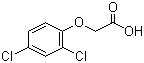 |
| Molecular Formula | C8H6Cl2O3 |
| Molecular Weight | 221.04 |
| CAS Registry Number | 94-75-7 |
| EC Number | 202-361-1 |
| SMILES | C1=CC(=C(C=C1Cl)Cl)OCC(=O)O |
| Density | 1.563 g/cm3 |
|---|---|
| Melting point | 137-141 °C |
| Boiling point | 160 °C (0.4 torr) |
| Water solubility | Slightly soluble. Decomposes. 0.0890 g/100 mL |
| Hazard Symbols |   GHS05;GHS07 Danger Details GHS05;GHS07 Danger Details | ||||||||||||||||||||||||||||||||||||||||||||||||||||
|---|---|---|---|---|---|---|---|---|---|---|---|---|---|---|---|---|---|---|---|---|---|---|---|---|---|---|---|---|---|---|---|---|---|---|---|---|---|---|---|---|---|---|---|---|---|---|---|---|---|---|---|---|---|
| Risk Statements | H302-H317:-H318:-H335:-H412: Details | ||||||||||||||||||||||||||||||||||||||||||||||||||||
| Safety Statements | P261-P264-P264+P265-P270-P271-P272-P273-P280-P301+P317-P302+P352-P304+P340-P305+P354+P338-P317-P319-P321-P330-P333+P317-P362+P364-P403+P233-P405-P501 Details | ||||||||||||||||||||||||||||||||||||||||||||||||||||
| Hazard Classification | |||||||||||||||||||||||||||||||||||||||||||||||||||||
| |||||||||||||||||||||||||||||||||||||||||||||||||||||
| Transport Information | UN 2765 | ||||||||||||||||||||||||||||||||||||||||||||||||||||
| SDS | Available | ||||||||||||||||||||||||||||||||||||||||||||||||||||
 chemBlink Chemical Story
|
2,4-Dichlorophenoxyacetic acid, commonly abbreviated as 2,4-D, is one of the most extensively used synthetic auxins and herbicides in agricultural history. It was first developed in the 1940s, during the period of intense research on plant growth regulators and chemical weed control. The chemical structure of 2,4-D mimics that of natural auxins, particularly indole-3-acetic acid, allowing it to selectively disrupt normal plant growth processes. When applied to broadleaf weeds, it induces uncontrolled cell division and elongation, ultimately causing the plant's death while leaving monocot crops like wheat, corn, and rice relatively unharmed. The initial discovery and testing of 2,4-D were driven by the need to increase crop productivity by eliminating competition from unwanted vegetation. During World War II, its potential for large-scale application in food production gained strategic importance. After the war, it quickly became commercialized and was one of the first herbicides to be produced in large quantities for agricultural use. Its success helped usher in the era of modern chemical weed management, shaping weed control practices for decades to follow. 2,4-D has been applied in various agricultural systems, including cereal grains, maize, sugarcane, and pasture management. Its ability to control a wide range of broadleaf weeds at relatively low application rates made it highly popular. In turf management and lawn care, it has also been widely used to maintain weed-free grass areas. In forest management, it serves as a tool for controlling brush and invasive species. Additionally, 2,4-D has played a role in no-till and conservation tillage systems by allowing weed control without disrupting the soil. Several forms of 2,4-D are commercially available, including acid, ester, and salt derivatives, which vary in volatility, solubility, and persistence. This flexibility allows for tailored application methods depending on crop type, climate, and environmental conditions. Formulations have been designed to improve efficacy while minimizing environmental impact, and many are compatible with tank mixes for integrated weed control strategies. Despite its widespread use, 2,4-D has also been the subject of regulatory review and public scrutiny due to concerns about its ecological and human health effects. Environmental fate studies have shown that it can leach into groundwater and affect non-target species if not used properly. Regulatory agencies around the world have established guidelines and safety thresholds for its use, including buffer zones and application timing restrictions, to reduce the risk of drift and contamination. As part of sustainable agriculture, there is ongoing research into improving application technologies and resistance management strategies to maintain the long-term utility of 2,4-D. The legacy of 2,4-D is significant in both agronomic and scientific contexts. It was instrumental in demonstrating the feasibility of chemical weed control on a global scale and continues to be an important tool in integrated weed management. Advances in biotechnology, including genetically modified crops tolerant to 2,4-D, have extended its utility and opened new avenues for its application. References 1984. A gas chromatographic method for determination of 2,4-D residues in urine after occupational exposure. Bulletin of Environmental Contamination and Toxicology, 33(6). DOI: 10.1007/bf01625578 1979. Oxygen consumption in Lepomis machrochirus exposed to 2,4-D or 2,4,5-T. Bulletin of Environmental Contamination and Toxicology, 22(1). DOI: 10.1007/bf01685512 1971. Pesticide effect on growth and 14 C assimilation in a freshwater alga. Bulletin of Environmental Contamination and Toxicology, 6(1). DOI: 10.1007/bf01559063 |
| Market Analysis Reports |