Developing a film photograph doesn't make it safe to see the light.
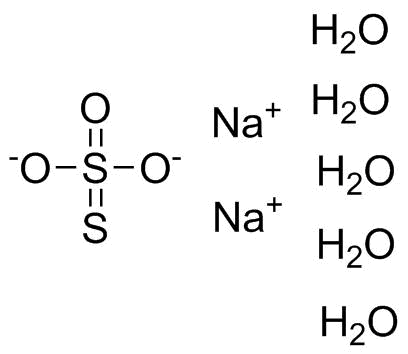
After development, unexposed silver halide crystals remain in the film and are still light-sensitive. Sodium thiosulfate solves the problem by forming soluble complexes with silver, allowing those remaining silver salts to dissolve and wash away.
This is photographic "fixing," and sodium thiosulfate was known to generations of photographers simply as "hypo."
The same compound also neutralizes residual chlorine in water and serves as a classic reagent in iodine titrations.
In the darkroom, the developer made the picture appear. Sodium thiosulfate helped make sure the light could no longer erase the achievement.

Global Chemical Database