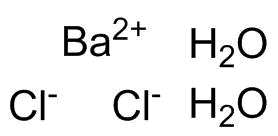
Barium chloride played an unexpected role in the story of radium.
Barium and radium are chemically so similar that radioactive radium followed barium during early separation work. Marie Curie exploited one small difference: radium chloride is slightly less soluble than barium chloride.
By repeatedly crystallizing mixtures of the two and keeping the more radioactive fraction, she gradually concentrated the radium.
Today, barium chloride is better known for a much faster separation. Ba2+ reacts with sulfate to form an extremely insoluble white BaSO4 precipitate, making it a classic reagent for sulfate analysis.
One chemistry lesson happens in seconds. The other required countless repeated separations.

Global Chemical Database