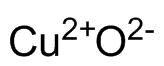
Cupric oxide
CAS 1317-38-0
Black CuO and red Cu2O show how oxidation state can change a material before engineering even begins.
Black CuO and red Cu2O contain the same elements but different copper oxidation states. Their colors signal differences in electronic and crystal structure. Copper(II) oxide, CuO, occurs naturally as tenorite and can also be prepared in many engineered forms. Researchers study its particles, wires and films for sensing, catalysis and energy storage because surfaces and charge-transport distances matter. A gas-sensing signal, for example, depends on the sample and operating conditions, including humidity and temperature. Electrochemical performance also depends on how the electrode accommodates chemical changes. A successful nanostructure is therefore not a universal property of every CuO powder. The formula identifies the compound; the architecture and measurement conditions help determine its behavior in a particular experiment or device under study.
Published:
2026-10-19