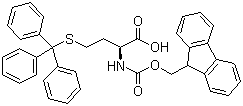
N-Fmoc-S-trityl-L-homocysteine
CAS 167015-23-8
Homocysteine shows how a temporary sulfur handle can help build a peptide and then become methionine.
A useful synthetic residue can become a different residue in the finished peptide. Homocysteine offers a sulfur handle for chemical ligation; subsequent sulfur methylation can create methionine without extending the peptide backbone. Fmoc-Homocys(Trt)-OH supplies the amino-acid unit with separate protection on nitrogen and sulfur, which must be addressed at the appropriate stages. A reported chemical synthesis of the GstI protein illustrates the broader strategy of ligation at a methionine-associated junction. The final product still needs characterization of both backbone joining and side-chain identity. This approach shows how protein synthesis can exploit temporary reactivity: a side chain helps create the connection, then chemical editing produces the residue required by the target sequence rather than leaving the synthetic handle unchanged.
Published:
2026-11-02