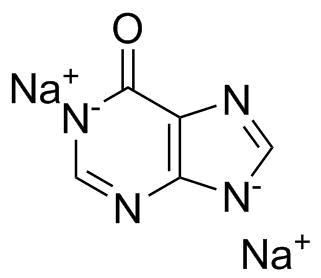
Hypoxanthine disodium
CAS 199329-61-8
How did a recycled purine ring become a tool for selecting cells?
Read on chemBlink: https://www.chemblink.com/en/products/199329-61-8.htm
Hypoxanthine became useful in cell selection because a purine ring can be recycled. An enzyme called HPRT joins hypoxanthine to a phosphoribosyl group to make a nucleotide. In HAT medium, blocking parts of de novo nucleotide synthesis makes such salvage routes essential under the appropriate selection conditions. Early studies of hybrid mouse cells helped establish this experimental logic. The disodium salt is a distinct reagent form, and its sodium contributes to the mass in the bottle. After dissolution, protonation depends on the solution environment. The historical application concerns hypoxanthine-dependent metabolism, not a unique ability of the salt itself to recognize hybrid cells. Chemical identity tells which material was weighed; metabolic selection tells why some cells can use the detour and others cannot.
Published:
2026-11-22