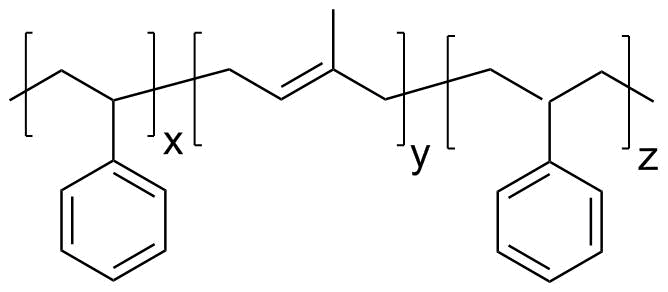
Polystyrene-block-polyisoprene-block-polystyrene
CAS 25038-32-8
How can the same polymer chain support rubbery behavior and still let a material flow when heated?
Read on chemBlink: https://www.chemblink.com/en/products/25038-32-8.htm
SIS puts a flexible polyisoprene block between two polystyrene blocks. The hard and soft parts are connected by bonds, but they can gather into different regions rather than mixing uniformly. In a typical elastomeric grade, the hard regions hold chain ends and act as physical junctions. Some chains connect different regions, while others loop back to the same one. Heating can loosen those restraints and allow flow. This is why one architecture can support rubbery behavior in use and thermoplastic processing when heated. Adhesive formulators use this balance to help a coating make contact with a surface while retaining cohesion. The CAS describes a polymer class, not one molecular weight or a promise that every grade will have the same tack.
Published:
2026-11-12