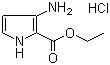
3-Amino-2-ethoxycarbonylpyrrole hydrochloride comes surprisingly close. It begins with a five-membered pyrrole ring. Right next to each other are two useful groups: an amino group and an ester. To a synthetic chemist, that arrangement isn't random.
It's an invitation to build another ring. With the right reaction partner, those neighboring groups can participate in condensation and cyclization, transforming the simple pyrrole into a fused pyrrolopyrimidine system. Now one ring has become two.

Global Chemical Database