Materials scientists often think about something much smaller.
A modern plastic may contain less than 1% antioxidant, yet that tiny amount can determine whether a product lasts for years or begins to fail after only a short time.
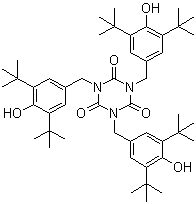
Antioxidant 3114 is a good example. It belongs to a family of ""hindered phenol"" antioxidants that stop destructive free-radical reactions before they can damage polymer chains. But what makes this molecule especially interesting is not simply what it does—it's how it was designed.
Earlier antioxidants often evaporated, migrated to the surface, or were gradually lost during service. Antioxidant 3114 was built differently. Its large, highly symmetrical molecular structure makes it far less likely to leave the polymer, allowing it to provide protection over much longer periods.

Global Chemical Database