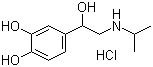
Isoprenaline hydrochloride (CAS 51-30-9) has a chemical story that connects molecular identity with practical chemistry. Isoprenaline hydrochloride, also called isoproterenol hydrochloride, is the salt of a landmark synthetic catecholamine agonist. Historical reviews place isoproterenol's introduction around 1940 and describe it as an important early step toward pharmacologically selective bronchodilation. Unlike epinephrine, it has little alpha-adrenergic agonism and strongly stimulates beta receptors, but it is not beta2-selective: beta1 cardiac stimulation accompanies beta2 bronchodilation. It became both a medicine and an experimental tool that helped establish alpha/beta adrenoceptor pharmacology. Later beta2-selective agonists reduced cardiac stimulation and largely displaced it from routine asthma treatment.
The exact CAS identity matters because related salts, stereoisomers, intermediates and finished medicines can play very different roles even when their names look closely related.
Its story also shows why synthesis and analytical control belong together: chemists must create the intended structure, distinguish it from process-related species and verify the form actually being handled.

Global Chemical Database