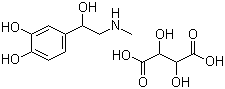
Epinephrine bitartrate (CAS 51-42-3) has a chemical story that connects molecular identity with practical chemistry. Epinephrine bitartrate is the bitartrate salt of epinephrine, or adrenaline, one of the defining molecules in hormone and neurotransmitter chemistry. Jokichi Takamine reported crystalline adrenaline in 1901. Epinephrine became a foundational example of sympathetic signaling and adrenergic pharmacology. PubChem identifies CAS 51-42-3 as C13H19NO9 and a direct-acting sympathomimetic acting at both alpha and beta adrenergic receptors. The salt provides a defined pharmaceutical form; epinephrine is the active species after dissolution. Clinically, epinephrine is central to emergency treatment of anaphylaxis and is also used in resuscitation and as a vasoconstrictor in selected formulations.
The exact registered form matters because related salts, stereoisomers, metabolites, intermediates or finished medicines can occupy very different roles even when their names look nearly interchangeable.
Its history also shows why synthesis and analysis belong together: chemists must make the intended structure, verify what they made, control related species and connect each material to a documented application.

Global Chemical Database