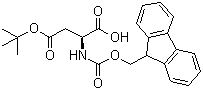
Fmoc-L-Aspartic acid beta-tert-butyl ester
CAS 71989-14-5
Why can a protected amino acid still surprise a peptide chemist?
Read on chemBlink: https://www.chemblink.com/en/products/71989-14-5.htm
An amino acid can carry more reactive groups than a peptide chemist wants to use at once. Aspartic acid has two carboxylic acid groups, so this building block protects the side chain acid as a tert-butyl ester while leaving the main chain acid available. Fmoc separately protects the amino group. The arrangement enables planned steps in peptide assembly, but does not eliminate every side reaction. Certain sequences can form an aspartimide involving the side chain and neighboring backbone. Studies of model peptides have shown that the local sequence and protection strategy matter. This reagent tells a broader story: temporary chemical protection helps direct a synthesis, while experimental evidence and product analysis establish how well that direction worked for a particular peptide under particular conditions.
Published:
2026-11-22