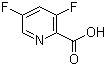
Not always. 3,5-Difluoropyridine-2-carboxylic acid is a good example. It contains a pyridine ring, a carboxylic acid, and two fluorine atoms. The carboxylic acid is one construction site. Chemists can use it to form esters or attach amines through amide bonds.
But the fluorines can provide another kind of construction site. Because the pyridine ring is electron-deficient, a nucleophile can sometimes attack a carbon bearing F and replace the fluorine. Published chemistry shows exactly that.

Global Chemical Database