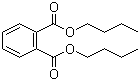
Dibutyl phthalate, or DBP, tells that story.
For much of the twentieth century, DBP was valued for a simple reason: it could help make materials more flexible.
Like other plasticizers, its molecules can sit among polymer chains and give those chains more freedom to move. DBP also found its way into adhesives, coatings, inks, and other formulations.
It was useful chemistry.
But there was a catch hidden in the way plasticizers work.
DBP isn't normally bonded to the polymer. It can gradually leave the material and enter our surroundings.

Global Chemical Database