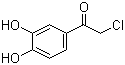
2-Chloro-3',4'-dihydroxyacetophenone (CAS 99-40-1) has a chemical story that connects molecular identity with practical chemistry. 2-Chloro-3',4'-dihydroxyacetophenone is systematically 2-chloro-1-(3,4-dihydroxyphenyl)ethanone. It combines a catechol ring with an alpha-chloroketone side chain. The pairing explains its synthetic value: two phenolic hydroxyl groups reproduce the 3,4-dihydroxy aromatic pattern familiar from catecholamine chemistry, while the chloromethyl ketone provides an electrophilic handle for nucleophilic substitution and heterocycle-forming sequences. Literature records reach back many decades, and modern reports prepare it from catechol and chloroacetyl chloride under Lewis-acid conditions. It appears as an intermediate in medicinal and heterocyclic chemistry rather than as a finished therapeutic agent. Public exact-CAS literature does not justify assigning one dominant commercial end use, so its most reliable story is functional-group chemistry and its role as a versatile building block.
The exact registered form matters because related salts, stereoisomers, metabolites, intermediates or finished medicines can occupy very different roles even when their names look nearly interchangeable.

Global Chemical Database