Fluorescent Brightener 220, also known as Optical Brightening Agent 220 (OBA 220), is a chemical compound widely used in various industries to enhance the appearance of materials by increasing their brightness and whiteness. The discovery of Fluorescent Brightener 220 is rooted in the development of optical brighteners, which were initially introduced in the mid-20th century as a means to improve the aesthetic qualities of textiles and paper products. These compounds work by absorbing ultraviolet (UV) light and re-emitting it as visible blue light, thereby counteracting the natural yellowing of materials and giving them a brighter, more vibrant appearance.
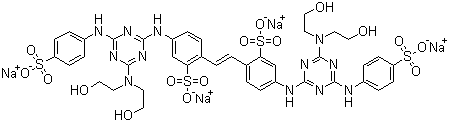
Fluorescent Brightener 220 belongs to the stilbene class of optical brighteners, which are known for their strong fluorescent properties. The chemical structure of Fluorescent Brightener 220 is characterized by the presence of stilbene-based moieties that are highly effective in absorbing UV light and emitting blue light. This property makes it particularly useful in applications where enhanced whiteness is desired.
One of the primary applications of Fluorescent Brightener 220 is in the textile industry. It is commonly used in detergents and fabric softeners to maintain the brightness of white and light-colored fabrics. During the washing process, Fluorescent Brightener 220 adheres to the fibers of the fabric, ensuring that the material appears whiter and brighter after each wash. This effect is especially noticeable under UV light, where the brightening agent’s fluorescence is most pronounced. The use of Fluorescent Brightener 220 in laundry products has become a standard practice, contributing significantly to the perceived cleanliness and freshness of fabrics.
In addition to textiles, Fluorescent Brightener 220 is extensively used in the paper industry. It is added to paper pulp during the manufacturing process to produce brighter and more visually appealing paper products. This is particularly important for high-quality printing papers, where the whiteness and brightness of the paper can significantly impact the clarity and contrast of printed images and text. The presence of Fluorescent Brightener 220 ensures that the paper maintains its brightness over time, even when exposed to light and environmental factors that could otherwise cause yellowing.
Fluorescent Brightener 220 also finds applications in the plastics industry, where it is used to improve the appearance of plastic products. In this context, the brightener is incorporated into the plastic material during production, enhancing the brightness and whiteness of the final product. This is particularly important for consumer goods such as packaging materials, where the visual appeal of the product can influence consumer purchasing decisions.
Moreover, Fluorescent Brightener 220 is used in coatings and paints to improve the brightness and visual appeal of surfaces. By adding this brightener to paints, manufacturers can achieve a higher level of whiteness and brightness, making surfaces look more vibrant and clean. This application is particularly valuable in architectural coatings, where the appearance of walls and other surfaces is a key consideration.
The discovery and development of Fluorescent Brightener 220 have had a significant impact on various industries, allowing manufacturers to produce materials with enhanced aesthetic qualities. Its ability to impart a brighter, more vibrant appearance to textiles, paper, plastics, and coatings has made it an indispensable component in the production of high-quality consumer goods. As technology advances, ongoing research into the optimization of Fluorescent Brightener 220 and similar compounds continues to drive innovation in these industries, ensuring that the demand for brighter and more visually appealing products is consistently met.
References
1973. MVC-Report., 2(193).
|




 GHS07 Warning Details
 chemBlink Chemical Story