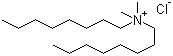
Bisoctyl dimethyl ammonium chloride is a quaternary ammonium compound characterized by a nitrogen atom bonded to two octyl (C8) alkyl chains and two methyl groups, with chloride as the counterion. This cationic structure imparts both surface activity and antimicrobial properties, which have been recognized and utilized since the mid-20th century when quaternary ammonium compounds (QACs) were extensively developed for disinfectant and surfactant applications. The long hydrophobic alkyl chains enable adsorption onto hydrophobic surfaces, while the positively charged nitrogen interacts with negatively charged microbial membranes, leading to cell lysis and effective antimicrobial action.
The primary application of bisoctyl dimethyl ammonium chloride is as a disinfectant and sanitizer in industrial, institutional, and household settings. It demonstrates broad-spectrum activity against Gram-positive and Gram-negative bacteria, as well as certain fungi and viruses. Its use in surface disinfectants, hard-surface cleaners, and sanitizing sprays allows rapid microbial control and contributes to hygiene in healthcare facilities, food processing environments, and public spaces.
In addition to its antimicrobial functions, bisoctyl dimethyl ammonium chloride serves as a cationic surfactant in personal care and cosmetic products. It is incorporated into shampoos, conditioners, and skin care formulations for its conditioning, antistatic, and emulsifying properties. The hydrophobic alkyl chains adhere to hair or skin surfaces, reducing static, improving combability, and providing a smooth, soft feel. Its cationic nature ensures compatibility with negatively charged surfaces, enhancing retention and efficacy in these products.
The compound also finds applications in industrial and textile processes. It acts as an antistatic agent, fabric softener, and emulsifier, where it stabilizes oil-in-water emulsions and improves dispersion of materials in aqueous systems. In pulp and paper, water treatment, and other chemical industries, it is employed to modify surface properties, promote flocculation, and enhance the performance of formulated products.
Safety and environmental considerations are important in the use of bisoctyl dimethyl ammonium chloride. Like other quaternary ammonium compounds, it is toxic to aquatic organisms and can cause irritation to skin and eyes at high concentrations. Appropriate handling protocols, controlled usage, and wastewater treatment are necessary to mitigate environmental and health risks. Regulatory frameworks guide its safe application and ensure minimal ecological impact.
The development and continued use of bisoctyl dimethyl ammonium chloride reflect the broader importance of quaternary ammonium chemistry in creating multifunctional molecules that combine antimicrobial efficacy, surface activity, and conditioning properties. Its versatility in disinfectants, personal care, textiles, and industrial processes demonstrates the practical value of cationic surfactants and underscores their enduring role in both commercial and technological applications.
References
2023. Photocatalytic degradation of non-ionic, anionic, and cationic surfactants: from batch experiments through equilibrium/kinetic study to ecotoxicology analysis. Chemical Papers, 77(10).
DOI: 10.1007/s11696-023-03117-3
2012. Densities and Conductivities of Aqueous N,N,N-Alkyloctyldimethylammonium Chloride at Different Temperatures. Journal of Solution Chemistry, 41(10).
DOI: 10.1007/s10953-012-9886-4
2024. Didecyldimethylammonium Chloride. Antiseptic Stewardship.
DOI: 10.1007/978-3-031-66074-0_13
|






 GHS05;GHS06;GHS07;GHS09 Danger Details
 chemBlink Chemical Story