Pantoprazole is a proton pump inhibitor (PPI) that was first synthesized in the late 1980s by researchers at Byk Gulden, a German pharmaceutical company. It was developed to inhibit gastric acid secretion by selectively targeting the H+/K+ ATPase enzyme system in the stomach. The discovery of pantoprazole marked a significant advancement in the treatment of acid-related disorders, providing an effective therapeutic option with improved stability and bioavailability compared to earlier PPIs.
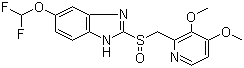
The synthesis of pantoprazole involves the modification of the benzimidazole core structure, which enhances its acid stability and selective inhibition of gastric proton pumps. As a prodrug, pantoprazole is activated in the acidic environment of the stomach, where it covalently binds to cysteine residues on the proton pump, leading to prolonged suppression of acid secretion. This mechanism contributes to its efficacy in treating gastroesophageal reflux disease (GERD), peptic ulcers, and Zollinger-Ellison syndrome.
Pantoprazole has gained widespread clinical use due to its favorable pharmacokinetics and lower potential for drug interactions compared to other PPIs. It is commonly prescribed for short-term and long-term management of acid-related disorders. Studies have shown that pantoprazole maintains gastric pH levels more consistently, which is beneficial for patients requiring long-term acid suppression therapy. Additionally, pantoprazole has been evaluated for its potential protective effects against nonsteroidal anti-inflammatory drug (NSAID)-induced gastric mucosal damage.
Despite its therapeutic benefits, pantoprazole has been associated with concerns regarding long-term use, including potential risks of nutrient malabsorption, altered gut microbiota, and increased susceptibility to infections. Ongoing research aims to further elucidate the long-term safety profile of pantoprazole and optimize its clinical applications.
References
2000. Influence of Helicobacter pylori eradication therapy on 13C aminopyrine breath test: comparison among omeprazole-, lansoprazole-, or pantoprazole-containing regimens. The American Journal of Gastroenterology, 95(10).
DOI: 10.1016/s0002-9270(00)01977-8
2005. Intragastric acidity during treatment with esomeprazole 40 mg twice daily or pantoprazole 40 mg twice daily - a randomized, two‐way crossover study. Alimentary Pharmacology & Therapeutics, 21(8).
DOI: 10.1111/j.1365-2036.2005.02432.x
2007. Prospective, Randomized Trial Comparing Effect of Oral Versus Intravenous Pantoprazole on Rebleeding After Nonvariceal Upper Gastrointestinal Bleeding: A Pilot Study. Digestive Diseases and Sciences, 52(9).
DOI: 10.1007/s10620-006-9282-2
|






 GHS07;GHS08;GHS09 Warning Details
 chemBlink Chemical Story