
Online Database of Chemicals from Around the World
| Epochem Co., Ltd. | China | |||
|---|---|---|---|---|
 | www.epochem.com | |||
 | +86 (21) 6760-1595 6760-1597 | |||
 | +86 (21) 6760-1605 | |||
 | seth_wang@epochem.com | |||
 | QQ Chat | |||
| Chemical manufacturer since 2006 | ||||
| chemBlink Standard supplier since 2005 | ||||
| Changzhou Odoc International Trade Co., Ltd. | China | |||
|---|---|---|---|---|
| www.odoc-co.com | |||
| +86 (519) 8515-5812 | |||
| +86 (519) 8515-5813 | |||
| office1@odoc-co.com | |||
| Chemical distributor | ||||
| chemBlink Standard supplier since 2008 | ||||
| Simagchem Corporation | China | |||
|---|---|---|---|---|
| www.simagchem.com | |||
| +86 13806087780 | |||
| +86 (592) 268-0237 | |||
| sale@simagchem.com | |||
| Chemical manufacturer since 2002 | ||||
| chemBlink Standard supplier since 2008 | ||||
| Hefei TNJ Chemical Industry Co., Ltd. | China | |||
|---|---|---|---|---|
| www.tnjchem.com | |||
| +86 (551) 6541-8684 | |||
| +86 (551) 6541-8697 | |||
| sales@tnjchem.com | |||
| Chemical manufacturer since 2001 | ||||
| chemBlink Standard supplier since 2010 | ||||
| BOC Sciences | USA | |||
|---|---|---|---|---|
| www.bocsci.com | |||
| +1 (631) 485-4226 | |||
| +1 (631) 614-7828 | |||
| info@bocsci.com | |||
| Chemical manufacturer | ||||
| chemBlink Standard supplier since 2010 | ||||
| Shanghai Hohance Chemical Co., Ltd. | China | |||
|---|---|---|---|---|
| www.hohance.com | |||
| +86 (21) 3111-5312 | |||
| +86 (21) 3111-5317 | |||
| info@hohance.com | |||
| Chemical manufacturer | ||||
| chemBlink Standard supplier since 2011 | ||||
| Intatrade Chemicals GmbH | Germany | |||
|---|---|---|---|---|
| www.intatrade.de | |||
| +49 (3493) 605-465 | |||
| +49 (3493) 605-470 | |||
| sales@intatrade.de | |||
| Chemical distributor | ||||
| chemBlink Standard supplier since 2011 | ||||
| Nanjing Norris-Pharm Technology Co., Ltd. | China | |||
|---|---|---|---|---|
| www.norris-pharm.com | |||
| +86 (25) 6611-2885 | |||
| sales@norris-pharm.com | |||
| Chemical manufacturer | ||||
| chemBlink Standard supplier since 2012 | ||||
| Depont Molecular Co., Ltd. | China | |||
|---|---|---|---|---|
| www.dpmolecular.com | |||
| +86 (25) 8421-5993 | |||
| +86 (25) 8421-7866 | |||
| jupiter@depontech.com | |||
| Chemical manufacturer since 2005 | ||||
| chemBlink Standard supplier since 2013 | ||||
| Ningbo NFC Chemical Co., Ltd. | China | |||
|---|---|---|---|---|
| www.nfcchem.com | |||
| +86 (574) 8799-1182 | |||
| +86 (574) 8799-1185 | |||
| sales@nfcchem.com | |||
| QQ Chat | |||
| Chemical distributor since 2013 | ||||
| chemBlink Standard supplier since 2013 | ||||
| Hangzhou Leap Chem Co., Ltd. | China | |||
|---|---|---|---|---|
| www.leapchem.com | |||
| +86 (571) 8771-1850 | |||
| market19@leapchem.com | |||
| QQ Chat | |||
| Chemical manufacturer since 2006 | ||||
| chemBlink Standard supplier since 2015 | ||||
| Zhengzhou Xlinebio Technology Co., Ltd. | China | |||
|---|---|---|---|---|
| www.xlinebio.com | |||
| +86 (371) 6131-8675 | |||
| +86 (371) 6131-8675 | |||
| sales@xlinebio.com | |||
| Chemical manufacturer since 2017 | ||||
| chemBlink Standard supplier since 2018 | ||||
| Xi'an Yinherb Bio-tech Co., Ltd | China | |||
|---|---|---|---|---|
| yinherb.ecer.com | |||
| +86 (29) 6333-2330 | |||
| sales@yinherb-nutraceuticals.com | |||
| QQ Chat | |||
| Chemical manufacturer since 2009 | ||||
| chemBlink Standard supplier since 2021 | ||||
| Wuhan Yuancheng Technology Development Co., Ltd. | China | |||
|---|---|---|---|---|
| www.yuanchengtechnology.com | |||
| +86 17282536078 | |||
| +86 17282536078 | |||
| 3042184429@qq.com | |||
| QQ Chat | |||
 | Skype Chat | |||
 | WeChat: 17282536078 | |||
| Chemical manufacturer since 2001 | ||||
| chemBlink Standard supplier since 2023 | ||||
| Zhejiang Rongchuang International Trade Co., Ltd. | China | |||
|---|---|---|---|---|
| www.peptideaas.com | |||
| +86 15924248838 | |||
| mihui41770@gmail.com | |||
| Chemical distributor since 2026 | ||||
| chemBlink Standard supplier since 2026 | ||||
| Aronis | Russia | |||
|---|---|---|---|---|
| www.aronis.ru | |||
| +7 (926) 578-0336 | |||
| +7 (495) 426-5336 | |||
| rakishev@aronis.ru | |||
| Chemical manufacturer | ||||
| Classification | API >> Inhibitor drug |
|---|---|
| Name | 4-Amino-3-phenylbutyric acid hydrochloride |
| Synonyms | Phenibut; Phenigam; Phenybut |
| Molecular Structure | 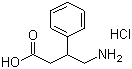 |
| Molecular Formula | C10H14ClNO2 |
| Molecular Weight | 215.68 |
| CAS Registry Number | 1078-21-3 |
| EC Number | 214-079-6 |
| SMILES | C1=CC=C(C=C1)C(CC(=O)O)CN |
| Melting point | 253 °C (decomp.) (Expl.) |
|---|---|
| Hazard Symbols |  GHS07 Warning Details GHS07 Warning Details | ||||||||||||||||||||
|---|---|---|---|---|---|---|---|---|---|---|---|---|---|---|---|---|---|---|---|---|---|
| Risk Statements | H315-H319-H335 Details | ||||||||||||||||||||
| Safety Statements | P261-P264-P264+P265-P271-P280-P302+P352-P304+P340-P305+P351+P338-P319-P321-P332+P317-P337+P317-P362+P364-P403+P233-P405-P501 Details | ||||||||||||||||||||
| Hazard Classification | |||||||||||||||||||||
| |||||||||||||||||||||
| SDS | Available | ||||||||||||||||||||
 chemBlink Chemical Story
|
4-Amino-3-phenylbutyric acid hydrochloride, commonly known as Phenibut, is a derivative of the neurotransmitter gamma-aminobutyric acid (GABA). Structurally, it is a beta-phenyl derivative of GABA with a hydrochloride salt form that enhances its solubility and bioavailability. Phenibut was first developed in the Soviet Union in the 1960s, where it was introduced as a pharmaceutical agent with anxiolytic, sedative, and cognitive-enhancing properties. Its unique chemical structure, featuring a phenyl ring, allows it to cross the blood-brain barrier more effectively than GABA itself, providing distinct pharmacological effects. The discovery of Phenibut arose from efforts to create a compound that could modulate GABAergic signaling while addressing its poor central nervous system penetration. Researchers identified the beta-phenyl modification as a means to increase lipophilicity and facilitate brain uptake. The compound was included in the Soviet cosmonauts' medical kits as an anti-stress agent during space missions, marking its early use in high-pressure scenarios. 4-Amino-3-phenylbutyric acid hydrochloride exerts its effects by acting as a GABA_B receptor agonist and has partial activity at GABA_A receptors. Its ability to modulate GABAergic activity contributes to its anxiolytic, muscle-relaxant, and nootropic effects. Clinically, it has been used in the management of anxiety, insomnia, and vestibular disorders, and as a supplement to enhance cognitive performance. Its calming effects without significant sedative impact have made it a preferred choice in specific therapeutic contexts. In addition to its clinical applications, Phenibut has gained attention in the dietary supplement industry for its purported benefits in stress reduction and mood enhancement. However, its use outside regulated medical contexts raises concerns about misuse and dependency due to its potential for tolerance and withdrawal symptoms with prolonged use. Regulatory authorities in many countries have restricted its availability, emphasizing the need for careful monitoring of its use. Ongoing research explores derivatives of Phenibut to optimize its pharmacokinetic and pharmacodynamic profile, aiming to reduce the risk of dependency while retaining therapeutic efficacy. Studies also investigate its potential in treating neurological conditions, including depression, post-traumatic stress disorder, and alcohol withdrawal syndrome. While 4-Amino-3-phenylbutyric acid hydrochloride remains a compound of significant pharmacological interest, its application highlights the delicate balance between therapeutic benefit and the need for regulation to prevent misuse. References 2023. A preclinical secondary pharmacology resource illuminates target-adverse drug reaction associations of marketed drugs. Nature Communications. DOI: 10.1038/s41467-023-40064-9 2024. Phenibut: Review and Pharmacologic Approaches to Treating Withdrawal. The Journal of Clinical Pharmacology. DOI: 10.1002/jcph.2414 2023. Clinical Presentations and Treatment of Phenibut Toxicity and Withdrawal: A Systematic Literature Review. Journal of Addiction Medicine. DOI: 10.1097/adm.0000000000001141 |
| Market Analysis Reports |