
Online Database of Chemicals from Around the World
| BOC Sciences | USA | |||
|---|---|---|---|---|
 | www.bocsci.com | |||
 | +1 (631) 485-4226 | |||
 | +1 (631) 614-7828 | |||
 | info@bocsci.com | |||
| Chemical manufacturer | ||||
| chemBlink Standard supplier since 2010 | ||||
| Amadis Chemical Co., Ltd. | China | |||
|---|---|---|---|---|
| www.amadischem.com | |||
| +86 (571) 8992-5085 | |||
| +86 (571) 8992-5065 | |||
| sales@amadischem.com | |||
| Chemical manufacturer since 2010 | ||||
| chemBlink Standard supplier since 2015 | ||||
| Targetmol China | China | |||
|---|---|---|---|---|
| www.targetmol.cn | |||
| +86 (400) 820-0310 | |||
| sales@targetmol.cn | |||
| Chemical manufacturer since 2015 | ||||
| chemBlink Standard supplier since 2025 | ||||
| Classification | API >> Circulatory system medication |
|---|---|
| Name | Etomoxir |
| Synonyms | (R)-(+)-Etomoxir; (2R)-2-[6-(4-Chlorophenoxy)hexyl]-2-oxiranecarboxylic acid ethyl ester |
| Molecular Structure | 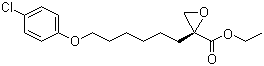 |
| Molecular Formula | C17H23ClO4 |
| Molecular Weight | 326.82 |
| CAS Registry Number | 124083-20-1 |
| SMILES | CCOC(=O)[C@]1(CO1)CCCCCCOC2=CC=C(C=C2)Cl |
| Density | 1.2±0.1 g/cm3 Calc.* |
|---|---|
| Boiling point | 405.0±25.0 °C 760 mmHg (Calc.)* |
| Flash point | 142.6±22.2 °C (Calc.)* |
| Solubility | DMSO, Chloroform, Ethyl Acetate (Expl.) |
| Index of refraction | 1.52 (Calc.)* |
| * | Calculated using Advanced Chemistry Development (ACD/Labs) Software. |
| Hazard Symbols |  GHS07 Warning Details GHS07 Warning Details |
|---|---|
| Risk Statements | H302-H315-H319-H335 Details |
| Safety Statements | P261-P305+P351+P338 Details |
| SDS | Available |
 chemBlink Chemical Story
|
Etomoxir is a synthetic compound developed as an inhibitor of carnitine palmitoyltransferase 1 (CPT1), a key enzyme involved in the mitochondrial uptake and β-oxidation of long-chain fatty acids. The inhibition of CPT1 by etomoxir prevents the transport of fatty acids into mitochondria, thereby shifting cellular energy metabolism from fatty acid oxidation to glucose utilization. This mechanism has made etomoxir a valuable tool in the study of metabolic pathways and diseases characterized by altered energy metabolism. The compound was initially developed in the 1980s to explore therapeutic strategies for diseases involving excessive fatty acid oxidation. Etomoxir’s primary site of action is CPT1 located on the outer mitochondrial membrane. By irreversibly binding to the enzyme, etomoxir reduces fatty acid oxidation and promotes glycolysis. Early research focused on its potential use in managing heart failure, where metabolic remodeling and energy inefficiency are hallmark features. In failing hearts, fatty acid oxidation is often elevated, leading to increased oxygen consumption. Etomoxir was investigated for its ability to improve cardiac efficiency by reducing fatty acid metabolism and enhancing glucose oxidation. Preclinical studies demonstrated that etomoxir could improve cardiac output and reduce oxygen demand in animal models of heart failure. These findings supported the progression of etomoxir into clinical trials. However, clinical development faced setbacks due to concerns about hepatotoxicity observed in some human subjects. As a result, further development as a therapeutic agent was limited, and the compound did not receive regulatory approval for clinical use. Despite these challenges, etomoxir remains widely used in basic and translational research. It has served as a critical tool in the investigation of metabolic disorders, including obesity, diabetes mellitus, and cancer. In metabolic studies, etomoxir has been employed to assess the contribution of fatty acid oxidation to energy homeostasis in different tissues. It has also been used to evaluate how metabolic shifts influence cell function, differentiation, and survival. In cancer research, etomoxir has been explored for its effects on cancer cell metabolism. Some tumor cells rely heavily on fatty acid oxidation for energy production and survival under nutrient-deprived or hypoxic conditions. By inhibiting CPT1, etomoxir can impair the metabolic flexibility of such cells, potentially sensitizing them to chemotherapeutic agents or other metabolic stressors. However, the non-specific effects and potential toxicity of etomoxir limit its application beyond experimental settings. Etomoxir is also of interest in immunometabolism, where cellular metabolic pathways are linked to immune cell activation and function. Studies have shown that etomoxir can modulate the differentiation and function of immune cells, such as T lymphocytes and macrophages, by altering their metabolic profile. These effects have implications for understanding immune responses in various physiological and pathological contexts. In summary, etomoxir was developed as a CPT1 inhibitor with potential therapeutic applications in metabolic and cardiovascular diseases. Although its clinical development was halted due to safety concerns, it continues to be an important research tool in the fields of metabolism, oncology, and immunology. Its utility in probing the role of fatty acid oxidation has contributed significantly to the understanding of cellular energy regulation and metabolic adaptation in health and disease. References 1987. Glucose kinetics during acute and chronic treatment of rats with 2[6(4-chloro-phenoxy) hexyl]oxirane-2-carboxylate, etomoxir. Biochemical Pharmacology, 36(22). DOI: 10.1016/0006-2952(87)90458-8 1988. Additive Hypoglycemic Effects of Drugs That Modify Free-Fatty Acid Metabolism by Different Mechanisms in Rats With Streptozocin-Induced Diabetes. Diabetes, 37(1). DOI: 10.2337/diab.37.1.28 2022. Targeting cancer cells in acidosis with conjugates between the carnitine palmitoyltransferase 1 inhibitor etomoxir and pH (low) insertion peptides. International Journal of Pharmaceutics, 624. DOI: 10.1016/j.ijpharm.2022.122041 |
| Market Analysis Reports |