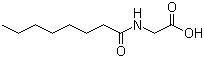
Capryloyl Glycine, commonly marketed under the INCI name Caprylylglycine, is an N-acyl amino acid derived from glycine and caprylic (octanoic) acid, with the molecular formula C10H19NO3. Although chemically simple, it represents an important trend in modern cosmetic science: the development of multifunctional ingredients that provide skin benefits while simultaneously contributing to product preservation. Today it is widely incorporated into skin-care, hair-care, and personal care formulations throughout the world.
The growing interest in amino acid derivatives during the late twentieth century was driven by the search for cosmetic ingredients that more closely resemble naturally occurring substances in the skin. Researchers recognized that amino acids and fatty acids are both essential components of the skin barrier. By combining these naturally inspired building blocks, chemists created a new class of acyl amino acids possessing desirable surface activity, mild antimicrobial properties, and excellent compatibility with skin.
Capryloyl Glycine emerged as one of the most successful members of this family. Unlike conventional preservatives whose principal purpose is to inhibit microbial growth, Capryloyl Glycine was developed as a multifunctional ingredient capable of supporting several formulation objectives simultaneously. It exhibits activity against a range of microorganisms associated with cosmetic contamination while also helping regulate skin conditions that favor excessive microbial proliferation. As a result, it is frequently incorporated into preservation systems together with other antimicrobial ingredients rather than serving as the sole preservative.
Another important characteristic of Capryloyl Glycine is its compatibility with modern skin-care concepts. Research during the past two decades has increasingly emphasized maintenance of the skin microbiome rather than complete elimination of microorganisms. Cosmetic scientists therefore began favoring ingredients that provide balanced antimicrobial performance without unnecessarily disrupting the normal microbial ecosystem of healthy skin. Within this context, Capryloyl Glycine has become a valuable formulation tool because it contributes to microbiological stability while remaining sufficiently mild for frequent topical use.
In addition to its antimicrobial function, Capryloyl Glycine is widely used as a skin-conditioning agent and sebum-balancing ingredient. Products intended for oily or acne-prone skin often incorporate the ingredient because it helps create conditions less favorable for excessive bacterial growth while maintaining a pleasant sensory profile. It is also used in scalp-care products, deodorants, facial cleansers, moisturizers, and leave-on cosmetic formulations where mildness is particularly important.
The ingredient also reflects an important change in cosmetic formulation philosophy. Earlier products often relied on relatively high concentrations of a single preservative, whereas modern formulations increasingly employ combinations of multifunctional ingredients that contribute antimicrobial protection, moisturization, skin conditioning, and sensory performance simultaneously. Capryloyl Glycine exemplifies this integrated approach by performing several complementary roles within a single formulation.
From a safety perspective, Capryloyl Glycine has been evaluated within the broader category of amino acid alkyl amides used in cosmetics. Reviews conducted by the Cosmetic Ingredient Review (CIR) Expert Panel have concluded that these ingredients are considered safe in current cosmetic applications when formulated to be non-irritating. Regulatory databases such as the European Commission's CosIng also include the ingredient for cosmetic use.
The development of Capryloyl Glycine illustrates how cosmetic chemistry has evolved beyond simple preservation toward multifunctional formulation design. Rather than functioning merely as an antimicrobial additive, it combines chemistry, skin biology, and formulation science to improve both product stability and consumer experience. This evolution reflects one of the defining trends in twenty-first-century personal care technology, where ingredient selection increasingly seeks to balance efficacy, safety, and skin compatibility.
**References**
1. Johnson, W. Jr. *et al.* (2017) *Safety Assessment of Amino Acid Alkyl Amides as Used in Cosmetics*. *International Journal of Toxicology*, 36(Suppl. 1), pp. 17S–56S. (Cosmetic Ingredient Review Expert Panel). Supported via PubChem.
2. European Commission. *CosIng – Cosmetic Ingredient Database* (Capryloyl Glycine entry).
3. Draelos, Z.D. (2016) *Cosmetic Dermatology: Products and Procedures*, 3rd ed. Wiley-Blackwell.
|




 GHS05 Danger Details
 chemBlink Chemical Story