
Online Database of Chemicals from Around the World
| Hefei TNJ Chemical Industry Co., Ltd. | China | |||
|---|---|---|---|---|
 | www.tnjchem.com | |||
 | +86 (551) 6541-8684 | |||
 | +86 (551) 6541-8697 | |||
 | sales@tnjchem.com | |||
| Chemical manufacturer since 2001 | ||||
| chemBlink Standard supplier since 2010 | ||||
| Sunny Industrial System GmbH | Germany | |||
|---|---|---|---|---|
| www.sunny-gmbh.de | |||
| +49 (211) 6999-0768 | |||
| +49 (211) 6999-0766 | |||
| info@sunny-gmbh.de | |||
| Chemical manufacturer | ||||
| chemBlink Standard supplier since 2010 | ||||
| BOC Sciences | USA | |||
|---|---|---|---|---|
| www.bocsci.com | |||
| +1 (631) 485-4226 | |||
| +1 (631) 614-7828 | |||
| info@bocsci.com | |||
| Chemical manufacturer | ||||
| chemBlink Standard supplier since 2010 | ||||
| Changsha Hecom Chemical Co., Ltd. | China | |||
|---|---|---|---|---|
| www.emdchem.com | |||
| +86 (731) 8578-1688 | |||
| tan@emdchem.com | |||
| Chemical distributor | ||||
| chemBlink Standard supplier since 2012 | ||||
| Hong Kong Yuxing Industrial Co., Limited | China | |||
|---|---|---|---|---|
| yuxingchem.com | |||
| +86 17734807625 | |||
| info@yuxingchem.com | |||
| Chemical distributor since 2025 | ||||
| chemBlink Standard supplier since 2026 | ||||
| Strem Chemicals, Inc. | USA | |||
|---|---|---|---|---|
| www.strem.com | |||
| +1 (978) 499-1600 | |||
| +1 (978) 465-3104 | |||
| info@strem.com | |||
| Chemical manufacturer | ||||
| Whyte Chemicals | UK | |||
|---|---|---|---|---|
| www.whytechemicals.co.uk | |||
| +44 (20) 8346-5946 | |||
| +44 (20) 8349-4589 | |||
| sales@whytechemicals.co.uk | |||
| Chemical distributor | ||||
| Avonchem/Chromos Express Ltd. | UK | |||
|---|---|---|---|---|
| www.avonchem.co.uk | |||
| +44 (1625) 434-300 | |||
| +44 (1625) 869-777 | |||
| info@avonchem.co.uk | |||
| Chemical manufacturer | ||||
| Classification | Inorganic chemical industry >> Inorganic salt >> Cyanide, cyanide oxide and cyanide complex |
|---|---|
| Name | Sodium cyanide |
| Molecular Structure | 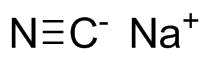 |
| Molecular Formula | NaCN |
| Molecular Weight | 49.00 |
| CAS Registry Number | 143-33-9 |
| EC Number | 205-599-4 |
| SMILES | [C-]#N.[Na+] |
| Density | 1.6 g/mL (Expl.) |
|---|---|
| Melting point | 563.3 - 564.4 °C (Expl.) |
| Boiling point | 1495.6 - 1496.7 °C (Expl.) |
| Solubility | water: soluble 58.0 g/100g (Expl.) |
| Hazard Symbols |      GHS05;GHS06;GHS07;GHS08;GHS09 DangerGHS05; Details GHS05;GHS06;GHS07;GHS08;GHS09 DangerGHS05; Details | ||||||||||||||||||||||||||||||||||||||||||||||||||||||||||||||||||||
|---|---|---|---|---|---|---|---|---|---|---|---|---|---|---|---|---|---|---|---|---|---|---|---|---|---|---|---|---|---|---|---|---|---|---|---|---|---|---|---|---|---|---|---|---|---|---|---|---|---|---|---|---|---|---|---|---|---|---|---|---|---|---|---|---|---|---|---|---|---|
| Risk Statements | H290-H300+H310+H330-H300-H310-H315-H318-H319-H330-H372-H400-H410 Details | ||||||||||||||||||||||||||||||||||||||||||||||||||||||||||||||||||||
| Safety Statements | P234-P260-P262-P264-P264+P265-P270-P271-P273-P280-P284-P301+P316-P302+P352-P304+P340-P305+P351+P338-P305+P354+P338-P316-P317-P319-P320-P321-P330-P332+P317-P337+P317-P361+P364-P362+P364-P390-P391-P403+P233-P405-P406-P501 Details | ||||||||||||||||||||||||||||||||||||||||||||||||||||||||||||||||||||
| Hazard Classification | |||||||||||||||||||||||||||||||||||||||||||||||||||||||||||||||||||||
| |||||||||||||||||||||||||||||||||||||||||||||||||||||||||||||||||||||
| Transport Information | UN 1689 | ||||||||||||||||||||||||||||||||||||||||||||||||||||||||||||||||||||
| SDS | Available | ||||||||||||||||||||||||||||||||||||||||||||||||||||||||||||||||||||
 chemBlink Chemical Story
|
Sodium cyanide, CAS 143-33-9, is the sodium salt of hydrogen cyanide, with formula NaCN. PubChem records it as a white crystalline material and emphasizes its extreme acute toxicity. Its industrial importance comes mainly from the cyanide ion's exceptionally strong ability to coordinate metals, a property useful in controlled industrial chemistry but also central to the compound's hazards. The largest well-documented use is precious-metal mining. Government of Canada assessments identify sodium cyanide as an extraction agent used mainly for gold and silver. Cyanide forms soluble complexes with these metals, allowing precious-metal values to be separated from mineral solids in carefully engineered processing systems. Cyanide chemistry has also been used in metal finishing and as an industrial chemical intermediate. The same small CN- ion that binds metals can interfere with essential biological metal centers. Acute cyanide poisoning disrupts cellular oxygen utilization, which is why sodium cyanide is treated as a highly hazardous industrial chemical. Contact with acids is particularly dangerous because acidification can release hydrogen cyanide gas. Industrial use therefore depends on tightly controlled closed processes, monitoring, trained personnel and regulated waste treatment. Environmental management is equally important because free cyanide and related species can be toxic to aquatic and terrestrial organisms. Sodium cyanide is a stark example of chemical usefulness and chemical hazard arising from the same molecular property: strong interaction with metal centers enables important industrial separations, while interaction with biological metal-containing enzymes creates severe toxicity. References: 1. PubChem, Sodium cyanide, CID 8929, CAS 143-33-9. 2. Government of Canada. Risk Management Scope for Cyanides: Metal Mining. 3. International Cyanide Management Institute. International Cyanide Management Code. |
| Market Analysis Reports |