Sodium citrate, a sodium salt of citric acid, is a versatile chemical compound widely used in various industries due to its buffering, emulsifying, and chelating properties. The discovery and understanding of sodium citrate can be traced back to the early studies of citric acid, which was first isolated from lemon juice by the Swedish chemist Carl Wilhelm Scheele in 1784. The subsequent neutralization of citric acid with sodium carbonate or sodium bicarbonate produces sodium citrate, which comes in three forms: monosodium, disodium, and trisodium citrate, with trisodium citrate being the most commonly used form.
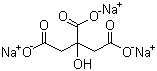
Sodium citrate's molecular structure, characterized by three sodium ions bound to a citrate anion, gives it a strong ability to act as a buffer. This buffering capacity allows sodium citrate to maintain the pH of solutions, making it particularly valuable in food and beverage production, where it helps to control acidity and enhance flavor stability. In addition to its role in pH regulation, sodium citrate also functions as an emulsifying agent, preventing the separation of fats and liquids in products like processed cheese, ice cream, and certain dairy products. Its emulsifying properties improve texture and consistency, contributing to the desirable qualities of many food items.
In the medical field, sodium citrate is widely used as an anticoagulant in blood collection and storage. It works by chelating calcium ions, which are essential for blood clotting, thus preventing coagulation during storage. This property makes sodium citrate a key component in blood transfusion and preservation processes, ensuring that blood remains in a fluid state until it is ready for use. Sodium citrate is also used in the treatment of certain medical conditions, such as metabolic acidosis and kidney stones, where it helps to alkalize the urine and prevent the formation of kidney stones by reducing the acidity of the urine.
Beyond its applications in food and medicine, sodium citrate is used in a variety of industrial processes. It serves as a buffering agent in detergents, helping to maintain the effectiveness of cleaning agents by stabilizing their pH levels. In the textile industry, sodium citrate is employed as a sequestering agent, where it binds to metal ions that could interfere with dyeing processes, ensuring even coloration of fabrics. Additionally, sodium citrate is used in the construction industry as a retarder in concrete mixtures, slowing the setting process and allowing for better workability during construction.
Sodium citrate's role in the beverage industry is particularly notable, where it is used in the formulation of soft drinks and effervescent beverages. Its ability to enhance flavor and maintain acidity levels makes it an essential ingredient in these products, contributing to their refreshing taste and stability over time. The compound is also used in brewing and winemaking, where it helps to regulate acidity and prevent unwanted reactions during fermentation.
The environmental and safety profile of sodium citrate further enhances its appeal across various applications. It is biodegradable, non-toxic, and generally recognized as safe (GRAS) by regulatory authorities such as the U.S. Food and Drug Administration (FDA), making it suitable for use in products that come into contact with food, beverages, and the human body.
Research into sodium citrate continues, with ongoing studies exploring its potential in new applications and optimizing its use in existing ones. As industries increasingly prioritize sustainability and safety, sodium citrate remains a valuable and widely used chemical compound, offering effective solutions across a range of fields.
References
1990. Predominant periportal expression of the phosphoenolpyruvate carboxykinase and tyrosine aminotransferase genes in rat liver. Dynamics during the daily feeding rhythm and starvation-refeeding cycle demonstrated by in situ hybridization. Histochemistry and Cell Biology, 94(5).
DOI: 10.1007/bf00271991
|




 GHS07 Warning Details
 chemBlink Chemical Story