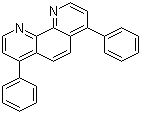
Bathophenanthroline is an organic compound that belongs to the family of bidentate ligands, which are molecules capable of binding to a metal center at two separate sites. This chemical compound is known for its ability to coordinate with transition metals, forming stable complexes that have been widely studied for their applications in various fields such as coordination chemistry, analytical chemistry, and material science. Bathophenanthroline is typically derived from phenanthroline, a polycyclic aromatic compound, by the addition of a sulfate group at the 4-position of the phenanthrene ring system. The resulting molecule is often used as a chelating agent in a wide range of applications due to its ability to form complexes with various metal ions.
The discovery of bathophenanthroline can be traced back to the early 20th century, when researchers began investigating the coordination properties of phenanthroline derivatives. These studies aimed to better understand the electronic and structural properties of metal-ligand complexes, which have applications in catalysis, medicine, and materials science. Bathophenanthroline itself was first synthesized as a potential ligand for metal ions, and over time, its usefulness in various chemical and biological processes became more evident. Its synthesis was relatively straightforward, involving the modification of phenanthroline to incorporate functional groups that enhance its coordination ability with metal ions.
One of the key applications of bathophenanthroline is its use as a ligand in coordination chemistry. The compound is known to form stable complexes with various transition metals, such as iron, copper, and zinc, which are crucial for the formation of metal-ligand bonds. These complexes exhibit unique properties, such as distinctive optical and electronic characteristics, which make them useful in a variety of chemical reactions, including catalysis and sensing applications. Bathophenanthroline complexes are particularly valued in the study of redox reactions and electron transfer processes, where they can serve as models for understanding the behavior of metal-containing enzymes or proteins involved in biological systems.
In addition to its role in coordination chemistry, bathophenanthroline is used as a reagent in analytical chemistry, particularly in the determination of metal ions in solution. One of the most common applications of bathophenanthroline in this field is its use in colorimetric assays for metal ions, where it forms brightly colored complexes with certain transition metals. These complexes can be quantified by measuring their absorbance at specific wavelengths, allowing for the detection and analysis of trace amounts of metal ions in samples. This application is widely used in environmental monitoring, water quality analysis, and clinical diagnostics.
Bathophenanthroline also finds applications in the field of material science, particularly in the development of novel materials for optoelectronic devices. Its ability to coordinate with metal ions and form stable complexes makes it a valuable building block for the design of materials with specific electronic properties. Researchers have explored its potential use in the fabrication of light-emitting diodes (LEDs), solar cells, and other electronic devices, where metal-ligand complexes play a critical role in the performance and efficiency of the materials.
Despite its many applications, the use of bathophenanthroline and its metal complexes does come with certain challenges. The stability of these complexes can be influenced by factors such as the metal ion used, the solvent environment, and the presence of other ligands, which can alter the reactivity and properties of the system. Additionally, the potential toxicity of certain metal-ligand complexes needs to be carefully considered in biological and environmental applications, especially when used in large-scale processes or in vivo experiments.
In conclusion, bathophenanthroline is a versatile compound with significant applications in chemistry, material science, and environmental analysis. Its ability to form stable complexes with metal ions makes it a valuable ligand in a range of chemical and analytical processes. Ongoing research into the properties and applications of bathophenanthroline continues to reveal new opportunities for its use in diverse fields, particularly in the development of advanced materials and sensors.
References
1989. Copper in human fetal tissues. European Journal of Pediatrics, 148(6), 516-518.
DOI: 10.1007/bf00441568
2007. Methods for studying iron metabolism in yeast mitochondria. Methods in Cell Biology, 80, 261-278.
DOI: 10.1016/s0091-679x(06)80013-0
2021. Light‐responsive and Protic Ruthenium Compounds Bearing Bathophenanthroline and Dihydroxybipyridine Ligands Achieve Nanomolar Toxicity towards Breast Cancer Cells. Photochemistry and Photobiology, 97(6), 1314-1325.
DOI: 10.1111/php.13508
|




 GHS07 Warning Details
 chemBlink Chemical Story