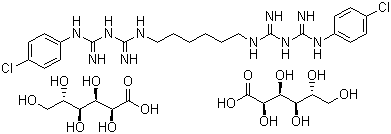
Chlorhexidine digluconate is a widely used antiseptic and disinfectant with broad-spectrum antimicrobial activity. It is the digluconate salt form of chlorhexidine, a synthetic bisbiguanide compound characterized by two chlorophenyl groups connected through a hexamethylene chain bearing biguanide functional groups. The digluconate counterions enhance its water solubility, which allows it to be formulated in aqueous solutions suitable for topical, oral, and medical applications.
The discovery of chlorhexidine dates back to the 1950s, when it was first synthesized and introduced as a potent antimicrobial agent. It quickly gained clinical importance due to its efficacy against a wide variety of Gram-positive and Gram-negative bacteria, as well as some fungi and enveloped viruses. Unlike many antiseptics available at the time, chlorhexidine exhibited strong residual activity, meaning it binds to the skin and mucous membranes and continues to exert antimicrobial effects after application.
Chemically, chlorhexidine is a dicationic molecule at physiological pH, and its positively charged biguanide groups enable electrostatic interactions with negatively charged bacterial cell membranes. This interaction disrupts the membrane’s integrity, increasing permeability and causing leakage of intracellular components such as potassium ions and nucleotides. At lower concentrations, chlorhexidine exhibits bacteriostatic properties by interfering with membrane function, while at higher concentrations, it causes bactericidal effects by precipitating cytoplasmic contents and inducing cell death.
Chlorhexidine digluconate is commonly used in healthcare settings as a preoperative skin disinfectant, hand scrub, and for surgical site preparation. Its effectiveness in reducing microbial flora on skin reduces the risk of postoperative infections. The compound is also widely employed in dental care, where it is used in mouthwash formulations to control plaque, reduce gingivitis, and manage periodontal disease. Its substantivity in the oral cavity allows for sustained antimicrobial action, which is beneficial in long-term oral hygiene management.
In addition to human healthcare, chlorhexidine digluconate is utilized in veterinary medicine as a topical antiseptic for wound care and infection prevention. It also finds application as a preservative in cosmetics and pharmaceuticals due to its ability to inhibit microbial growth without causing irritation at recommended concentrations.
The formulation of chlorhexidine digluconate varies depending on the application, with concentrations typically ranging from 0.5% to 4%. The compound is compatible with various excipients but can be inactivated by anionic surfactants such as soaps and detergents. Therefore, formulations often avoid the inclusion of such substances to preserve antimicrobial efficacy.
Safety profiles of chlorhexidine digluconate have been extensively studied. It is generally considered safe when used as directed; however, hypersensitivity reactions, including skin irritation, allergic contact dermatitis, and rare anaphylaxis, have been reported. Careful use is advised, especially in patients with known allergies to biguanide compounds. The compound should not be used in the middle ear or near the eyes due to potential toxicity in those tissues.
Environmental considerations include chlorhexidine’s moderate persistence and potential toxicity to aquatic organisms. Waste disposal and formulation regulations account for these factors to minimize ecological impact.
Mechanistically, chlorhexidine’s antimicrobial activity is enhanced by its ability to adsorb to bacterial surfaces and form a barrier against recolonization. This effect, combined with membrane disruption, makes it a valuable antiseptic in clinical infection control protocols.
In summary, chlorhexidine digluconate is a water-soluble bisbiguanide antiseptic with broad-spectrum antimicrobial activity, first introduced in the mid-20th century. Its mechanism involves disruption of microbial cell membranes through electrostatic interactions, leading to bacteriostatic and bactericidal effects. Widely used in medical, dental, veterinary, and cosmetic applications, it is valued for its efficacy, residual activity, and safety profile. Proper formulation and handling ensure its continued effectiveness as a frontline antimicrobial agent in infection prevention and control.
References
2024. Chlorhexidine gluconate for antisepsis in preterm neonates: A review of safety and efficacy. Pediatric Dermatology, 41(4).
DOI: 10.1111/pde.15709
2008. Interaction between Chlorhexidine Digluconate and EDTA. Journal of Endodontics, 34(12).
DOI: 10.1016/j.joen.2008.08.039
2007. Preoperative bathing or showering with skin antiseptics to prevent surgical site infection. The Cochrane Database of Systematic Reviews, 2.
DOI: 10.1002/14651858.cd004985.pub2
|






 GHS05;GHS07;GHS09 Danger Details
 chemBlink Chemical Story