
Online Database of Chemicals from Around the World
| Beijing Eagle Sky Pharmatech Co., Ltd. | China | |||
|---|---|---|---|---|
 | www.eagleskypharmatech.com | |||
 | +86 (10) 5979-9429 8875-5821 | |||
 | +86 (10) 5804-3698 | |||
 | sophia_818@126.com contact@eagleskypharmatech.com | |||
 | QQ Chat | |||
| Chemical manufacturer since 2009 | ||||
| chemBlink Premium supplier since 2010 | ||||
| Classification | Biochemical >> Peptide |
|---|---|
| Name | Kisspeptin |
| Synonyms | (4S)-4-[[(2S)-1-[(2S)-1-[(2S)-1-[(2S)-2-[[(2S)-2-[[(2S)-2-[[(2S,3R)-2-[(2-aminoacetyl)amino]-3-hydroxybutanoyl]amino]-3-hydroxypropanoyl]amino]-4-methylpentanoyl]amino]-3-hydroxypropanoyl]pyrrolidine-2-carbonyl]pyrrolidine-2-carbonyl]pyrrolidine-2-carbonyl]amino]-5-[[(2S)-1-[[(2S)-1-[[2-[[(2S)-1-[[(2S)-1-[[(2S)-5-amino-1-[[(2S)-5-amino-1-[(2S)-2-[[2-[[(2S)-1-[[(2S)-1-[[(2S)-1-[(2S)-2-[[(2S)-1-[[(2S)-1-[[(2S)-1-[[(2S)-5-amino-1-[[(2S,3S)-1-[(2S)-2-[[(2S)-1-[(2S)-2-[[(2S)-5-amino-1-[[2-[[(2S)-1-[[(2S)-1-[[(2S)-1-[[(2S)-1-[[(2S)-5-amino-1-[[(2S)-1-[[(2S)-1-[[(2S)-6-amino-1-[[(2S)-1-[[(2S)-1-[(2S)-2-[[(2S)-4-amino-1-[[(2S)-1-[[(2S)-4-amino-1-[[(2S)-1-[[(2S)-4-amino-1-[[(2S)-1-[[(2S)-1-[[2-[[(2S)-1-[[(2S)-1-[[(2S)-1-amino-1-oxo-3-phenylpropan-2-yl]amino]-5-carbamimidamido-1-oxopentan-2-yl]amino]-4-methyl-1-oxopentan-2-yl]amino]-2-oxoethyl]amino]-1-oxo-3-phenylpropan-2-yl]amino]-3-hydroxy-1-oxopropan-2-yl]amino]-1,4-dioxobutan-2-yl]amino]-3-(1H-indol-3-yl)-1-oxopropan-2-yl]amino]-1,4-dioxobutan-2-yl]amino]-3-(4-hydroxyphenyl)-1-oxopropan-2-yl]amino]-1,4-dioxobutan-2-yl]carbamoyl]pyrrolidin-1-yl]-4-methyl-1-oxopentan-2-yl]amino]-3-carboxy-1-oxopropan-2-yl]amino]-1-oxohexan-2-yl]amino]-4-carboxy-1-oxobutan-2-yl]amino]-5-carbamimidamido-1-oxopentan-2-yl]amino]-1,5-dioxopentan-2-yl]amino]-3-methyl-1-oxobutan-2-yl]amino]-4-methyl-1-oxopentan-2-yl]amino]-3-methyl-1-oxobutan-2-yl]amino]-1-oxopropan-2-yl]amino]-2-oxoethyl]amino]-1,5-dioxopentan-2-yl]carbamoyl]pyrrolidin-1-yl]-1-oxopropan-2-yl]carbamoyl]pyrrolidin-1-yl]-3-methyl-1-oxopentan-2-yl]amino]-1,5-dioxopentan-2-yl]amino]-5-carbamimidamido-1-oxopentan-2-yl]amino]-3-hydroxy-1-oxopropan-2-yl]amino]-3-(1H-imidazol-5-yl)-1-oxopropan-2-yl]carbamoyl]pyrrolidin-1-yl]-1-oxopropan-2-yl]amino]-3-hydroxy-1-oxopropan-2-yl]amino]-4-methyl-1-oxopentan-2-yl]amino]-2-oxoethyl]carbamoyl]pyrrolidin-1-yl]-1,5-dioxopentan-2-yl]amino]-1,5-dioxopentan-2-yl]amino]-5-carbamimidamido-1-oxopentan-2-yl]amino]-3-hydroxy-1-oxopropan-2-yl]amino]-2-oxoethyl]amino]-3-hydroxy-1-oxopropan-2-yl]amino]-3-hydroxy-1-oxopropan-2-yl]amino]-5-oxopentanoic acid |
| Molecular Structure | 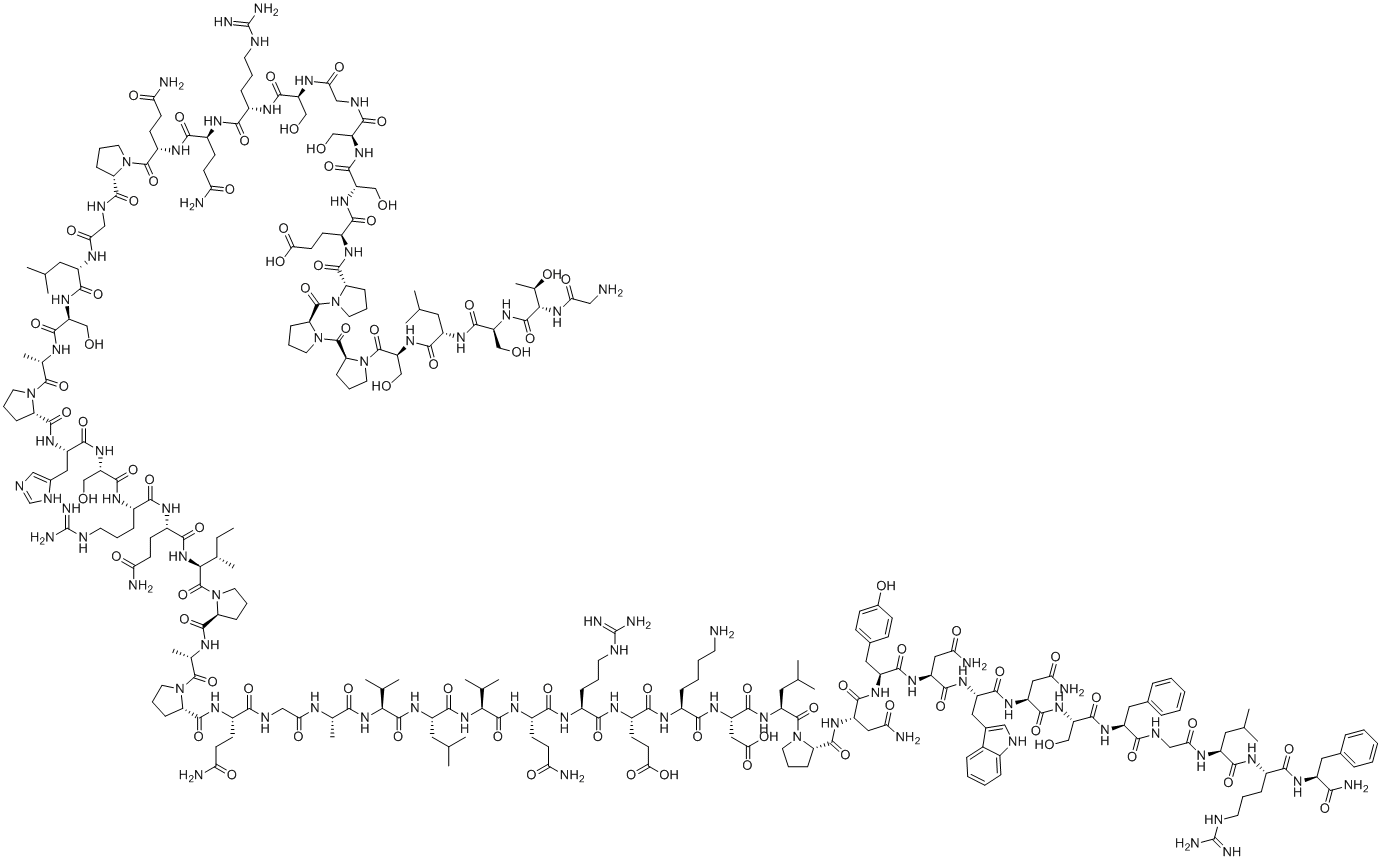 |
| Molecular Formula | C258H401N79O78 |
| Molecular Weight | 5857.43 |
| Protein Sequence | GTSLSPPPESSGSRQQPGLSAPHSRQIPAPQGAVLVQREKDLPNYNWNSFGLRF |
| CAS Registry Number | 388138-21-4 |
| SMILES | CC[C@H](C)[C@@H](C(=O)N1CCC[C@H]1C(=O)N[C@@H](C)C(=O)N2CCC[C@H]2C(=O)N[C@@H](CCC(=O)N)C(=O)NCC(=O)N[C@@H](C)C(=O)N[C@@H](C(C)C)C(=O)N[C@@H](CC(C)C)C(=O)N[C@@H](C(C)C)C(=O)N[C@@H](CCC(=O)N)C(=O)N[C@@H](CCCNC(=N)N)C(=O)N[C@@H](CCC(=O)O)C(=O)N[C@@H](CCCCN)C(=O)N[C@@H](CC(=O)O)C(=O)N[C@@H](CC(C)C)C(=O)N3CCC[C@H]3C(=O)N[C@@H](CC(=O)N)C(=O)N[C@@H](CC4=CC=C(C=C4)O)C(=O)N[C@@H](CC(=O)N)C(=O)N[C@@H](CC5=CNC6=CC=CC=C65)C(=O)N[C@@H](CC(=O)N)C(=O)N[C@@H](CO)C(=O)N[C@@H](CC7=CC=CC=C7)C(=O)NCC(=O)N[C@@H](CC(C)C)C(=O)N[C@@H](CCCNC(=N)N)C(=O)N[C@@H](CC8=CC=CC=C8)C(=O)N)NC(=O)[C@H](CCC(=O)N)NC(=O)[C@H](CCCNC(=N)N)NC(=O)[C@H](CO)NC(=O)[C@H](CC9=CN=CN9)NC(=O)[C@@H]1CCCN1C(=O)[C@H](C)NC(=O)[C@H](CO)NC(=O)[C@H](CC(C)C)NC(=O)CNC(=O)[C@@H]1CCCN1C(=O)[C@H](CCC(=O)N)NC(=O)[C@H](CCC(=O)N)NC(=O)[C@H](CCCNC(=N)N)NC(=O)[C@H](CO)NC(=O)CNC(=O)[C@H](CO)NC(=O)[C@H](CO)NC(=O)[C@H](CCC(=O)O)NC(=O)[C@@H]1CCCN1C(=O)[C@@H]1CCCN1C(=O)[C@@H]1CCCN1C(=O)[C@H](CO)NC(=O)[C@H](CC(C)C)NC(=O)[C@H](CO)NC(=O)[C@H]([C@@H](C)O)NC(=O)CN |
| Solubility | water: Soluble mg/mlL (Expl.) |
|---|---|
 chemBlink Chemical Story
|
Kisspeptin is a peptide hormone that was discovered through independent lines of research in cancer biology and reproductive endocrinology. It is encoded by the KISS1 gene, which was first identified in the mid-1990s during studies on human malignant melanoma. Researchers observed that expression of this gene suppressed the ability of cancer cells to metastasize, leading to its initial characterization as a metastasis suppressor gene. The peptide products derived from KISS1 were later named kisspeptins, a term reflecting the gene’s origin and its peptide nature. Subsequent research revealed that kisspeptin exerts its biological effects by binding to a specific G protein-coupled receptor, originally known as GPR54 and later designated KISS1R. The identification of this receptor marked a turning point in understanding the physiological role of kisspeptin. Genetic studies in humans and animal models demonstrated that loss-of-function mutations in KISS1R resulted in failure to undergo normal puberty, establishing kisspeptin as a critical regulator of the reproductive axis. These findings firmly placed kisspeptin at the center of neuroendocrine control of reproduction. Kisspeptin is synthesized as a larger precursor protein that is proteolytically processed into several active peptides of different lengths, including peptides commonly referred to as kisspeptin-54, kisspeptin-14, kisspeptin-13, and kisspeptin-10. Despite differences in length, these peptides share a common C-terminal sequence that is essential for receptor activation. The peptides are produced primarily in specific regions of the hypothalamus and act upstream of gonadotropin-releasing hormone neurons. The principal physiological role of kisspeptin is to stimulate the secretion of gonadotropin-releasing hormone, which in turn triggers the release of luteinizing hormone and follicle-stimulating hormone from the anterior pituitary gland. Through this mechanism, kisspeptin controls the onset of puberty, regulates gonadal function, and participates in the coordination of reproductive cycles. Experimental administration of kisspeptin has been shown to acutely increase luteinizing hormone levels in both humans and animals, confirming its potent stimulatory effect on the reproductive endocrine system. Beyond its central role in reproduction, kisspeptin has been investigated for additional physiological and pathological functions. Its original identification as a metastasis suppressor has prompted studies into its role in cancer biology. In several cancer types, reduced expression of KISS1 has been associated with increased metastatic potential, whereas restoration of kisspeptin signaling can inhibit cell migration and invasion in experimental models. These observations suggest that kisspeptin signaling influences cellular behaviors beyond endocrine regulation. Kisspeptin has also been implicated in metabolic regulation, placental biology, and cardiovascular function, although these areas remain less well defined than its reproductive role. In pregnancy, kisspeptin is produced in high amounts by placental tissue and is thought to contribute to trophoblast invasion control and placental development. Circulating kisspeptin levels rise markedly during normal pregnancy, highlighting its potential as a biomarker in obstetric research. In clinical and biomedical research, kisspeptin has become an important tool and therapeutic candidate. Synthetic kisspeptin peptides are used experimentally to assess hypothalamic-pituitary-gonadal axis function and to study disorders of puberty and fertility. There is ongoing interest in developing kisspeptin-based therapies for conditions such as hypogonadotropic hypogonadism, infertility, and possibly hormone-dependent diseases. The discovery of kisspeptin has therefore had a lasting impact on both basic science and applied medical research, linking molecular genetics, endocrinology, and clinical investigation. References Lee JH, Miele ME, Hicks DJ, Phillips KK, Trent JM, Weissman BE, Welch DR (1996) KiSS-1, a novel human malignant melanoma metastasis-suppressor gene. Journal of the National Cancer Institute 88 23 1731–1737 DOI: 10.1093/jnci/88.23.1731 de Roux N, Genin E, Carel JC, Matsuda F, Chaussain JL, Milgrom E (2003) Hypogonadotropic hypogonadism due to loss of function of the KiSS1-derived peptide receptor GPR54. Proceedings of the National Academy of Sciences of the United States of America 100 19 10972–10976 DOI: 10.1073/pnas.1834399100 Pinilla L, Aguilar E, Dieguez C, Millar RP, Tena-Sempere M (2012) Kisspeptins and reproduction: physiological roles and regulatory mechanisms. Physiological Reviews 92 3 1235–1316 DOI: 10.1152/physrev.00037.2010 |
| Market Analysis Reports |