
Online Database of Chemicals from Around the World
| Simagchem Corporation | China | |||
|---|---|---|---|---|
 | www.simagchem.com | |||
 | +86 13806087780 | |||
 | +86 (592) 268-0237 | |||
 | sale@simagchem.com | |||
| Chemical manufacturer since 2002 | ||||
| chemBlink Standard supplier since 2008 | ||||
| Taizhou Crene Biotechnology Co., Ltd. | China | |||
|---|---|---|---|---|
| www.pharm-intermediates.com | |||
| +86 (576) 8881-3233 8820-5808 +86 13396860566 | |||
| +86 (576) 8822-9589 | |||
| sales@pharm-intermediates.com | |||
 | QQ Chat | |||
| Chemical manufacturer since 2011 | ||||
| chemBlink Standard supplier since 2009 | ||||
| BOC Sciences | USA | |||
|---|---|---|---|---|
| www.bocsci.com | |||
| +1 (631) 485-4226 | |||
| +1 (631) 614-7828 | |||
| info@bocsci.com | |||
| Chemical manufacturer | ||||
| chemBlink Standard supplier since 2010 | ||||
| Amadis Chemical Co., Ltd. | China | |||
|---|---|---|---|---|
| www.amadischem.com | |||
| +86 (571) 8992-5085 | |||
| +86 (571) 8992-5065 | |||
| sales@amadischem.com | |||
| Chemical manufacturer since 2010 | ||||
| chemBlink Standard supplier since 2015 | ||||
| Santa Cruz Biotechnology, Inc. | USA | |||
|---|---|---|---|---|
| www.scbt.com | |||
| +1 (831) 457-3800 | |||
| +1 (831) 457-3801 | |||
| scbt@scbt.com | |||
| Chemical manufacturer | ||||
| Classification | Biochemical >> Inhibitor >> Mitogen-activated protein kinase (MAPK) >> P38 MAPK inhibitor |
|---|---|
| Name | PH 797804 |
| Synonyms | 3-Bromo-4-[(2,4-difluorobenzyl)oxy]-1-[5-[(methylamino)carbonyl]-2-methylphenyl]-6-methylpyridin-2(1H)-one |
| Molecular Structure | 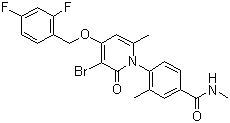 |
| Molecular Formula | C22H19BrF2N2O3 |
| Molecular Weight | 477.30 |
| CAS Registry Number | 586379-66-0 |
| SMILES | CC1=C(C=C(C=C1)C(=O)NC)N2C(=CC(=C(C2=O)Br)OCC3=C(C=C(C=C3)F)F)C |
| Solubility | <1 mg/mL (water), 52 mg/mL (DMSO) (Expl.) |
|---|---|
| Density | 1.5±0.1 g/cm3, Calc.* |
| Index of Refraction | 1.629, Calc.* |
| Boiling Point | 593.2±50.0 °C (760 mmHg), Calc.* |
| Flash Point | 312.6±30.1 °C, Calc.* |
| * | Calculated using Advanced Chemistry Development (ACD/Labs) Software. |
| Hazard Symbols |  GHS07 Warning Details GHS07 Warning Details |
|---|---|
| Risk Statements | H302-H315-H319-H335 Details |
| Safety Statements | P261-P264-P271-P301+P312-P302+P352-P305+P351+P338 Details |
| SDS | Available |
 chemBlink Chemical Story
|
PH 797804 is a chemical compound that belongs to a class of small molecules with significant potential in the field of drug development. It was originally discovered as part of research into targeting certain enzymes involved in key cellular processes, particularly those related to the regulation of the immune system and inflammation. As a potent and selective inhibitor, PH 797804 has attracted attention for its potential therapeutic applications in the treatment of diseases where dysregulation of immune responses and inflammation are critical components, such as autoimmune diseases and certain cancers. The compound was first identified by scientists working at pharmaceutical companies focused on the development of small-molecule inhibitors aimed at modulating specific biological pathways. In particular, PH 797804 is known for its inhibition of the Janus kinase (JAK) family of enzymes, which play an essential role in the signaling of various cytokines involved in immune cell function and inflammation. By targeting these enzymes, PH 797804 can effectively reduce excessive immune responses that contribute to a variety of diseases. One of the most promising applications of PH 797804 is in the treatment of autoimmune diseases, where the immune system mistakenly attacks the body's own tissues. Conditions like rheumatoid arthritis, inflammatory bowel disease (IBD), and lupus are often characterized by overactive immune responses, leading to chronic inflammation and tissue damage. PH 797804’s ability to inhibit JAK enzymes makes it a candidate for the treatment of these conditions by blocking the signaling pathways that drive immune activation and inflammation. In preclinical studies, PH 797804 demonstrated significant efficacy in reducing inflammation and immune cell infiltration in models of autoimmune diseases, suggesting its potential as a therapeutic agent. In addition to autoimmune diseases, PH 797804 has also been explored for its potential use in cancer therapy. Many cancers, especially hematological malignancies such as leukemia and lymphoma, involve abnormal immune signaling. The JAK-STAT pathway, which is regulated by JAK enzymes, is frequently implicated in the uncontrolled proliferation of cancerous cells. By inhibiting JAK activity, PH 797804 may help to suppress tumor growth and sensitize cancer cells to other treatments, such as chemotherapy or immune checkpoint inhibitors. Some early-phase clinical trials have shown promising results in combining PH 797804 with other cancer therapies, further supporting its role in oncology. PH 797804’s application in cancer and autoimmune diseases highlights its importance as a tool for modulating immune responses. Moreover, as a small-molecule inhibitor, PH 797804 is advantageous for being orally bioavailable, allowing for easier administration compared to biologic agents like monoclonal antibodies. This feature, coupled with its ability to specifically target JAK enzymes, places PH 797804 in an attractive position for future drug development. Further research into the pharmacodynamics and safety profile of PH 797804 continues, with ongoing clinical trials aimed at determining the compound’s full therapeutic potential. If successful, PH 797804 could become a valuable addition to the therapeutic arsenal for autoimmune diseases and cancers, offering a new pathway for treating conditions that are often difficult to manage with conventional therapies. References 2023. Drug combinations identified by high-throughput screening promote cell cycle transition and upregulate Smad pathways in myeloma. Cancer Letters. DOI: 10.1016/j.canlet.2023.216284 2021. A target-agnostic screen identifies approved drugs to stabilize the endoplasmic reticulum-resident proteome. Cell Reports. DOI: 10.1016/j.celrep.2021.109040 2009. Anti-Inflammatory Properties of a Novel N-Phenyl Pyridinone Inhibitor of p38 Mitogen-Activated Protein Kinase: Preclinical-to-Clinical Translation. The Journal of Pharmacology and Experimental Therapeutics. DOI: 10.1124/jpet.109.158329 |
| Market Analysis Reports |