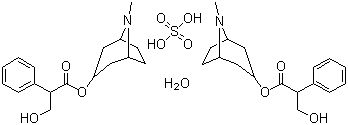
Atropine sulfate monohydrate is the sulfate salt form of atropine, a naturally occurring tropane alkaloid derived from plants of the Solanaceae family, such as *Atropa belladonna* and *Datura stramonium*. Its molecular formula is C17H23NO3·H2SO4·H2O. The compound typically appears as a white or off-white crystalline powder that is soluble in water and polar organic solvents, while being practically insoluble in nonpolar solvents. The monohydrate form contains one molecule of water of crystallization, which contributes to its crystalline stability.
The discovery of atropine dates back to the early 19th century when the active alkaloid was isolated from belladonna plants. Atropine sulfate was later developed to improve the solubility and stability of the base, making it suitable for medicinal applications. The sulfate salt retains the anticholinergic activity of atropine, which acts as a competitive antagonist of muscarinic acetylcholine receptors. This activity underlies its pharmacological applications, including the treatment of bradycardia, organophosphate poisoning, and as a mydriatic agent for ophthalmic examinations.
Synthesis of atropine sulfate monohydrate is primarily achieved by isolating atropine from plant sources followed by reaction with sulfuric acid in aqueous solution. The resulting sulfate salt crystallizes upon cooling or evaporation, and the monohydrate form is obtained through controlled crystallization conditions. The process ensures that the active alkaloid is converted into a stable, water-soluble salt suitable for pharmaceutical formulation.
Chemically, atropine sulfate monohydrate is a quaternary ammonium salt of a tertiary amine, and the sulfate anion enhances its water solubility. The atropine molecule consists of a tropane bicyclic ring linked to a tropic acid ester, which is responsible for its binding to muscarinic receptors. In solution, the sulfate ion dissociates, allowing the free atropine cation to exert its anticholinergic effects. The monohydrate crystallization also stabilizes the compound by forming hydrogen bonds between water molecules, sulfate ions, and the atropine cation.
In practical applications, atropine sulfate monohydrate is widely used in medicine. Intravenously or intramuscularly, it is employed to increase heart rate in patients with bradycardia or as part of advanced life support protocols. It serves as an antidote for organophosphate or carbamate poisoning, where it counteracts excessive acetylcholine activity. Topically, atropine sulfate is used in ophthalmology to dilate pupils and facilitate eye examinations or treat certain inflammatory conditions. Additionally, the compound is used in research to study muscarinic receptor function and autonomic nervous system pharmacology.
Physically, atropine sulfate monohydrate is stable under standard storage conditions in a cool, dry environment and should be protected from light and moisture to prevent degradation. Handling precautions include the use of gloves and eye protection, as atropine is biologically active and can cause anticholinergic side effects upon accidental exposure. Controlled dosing and careful formulation are critical in pharmaceutical applications to avoid toxicity.
Overall, atropine sulfate monohydrate is a clinically important anticholinergic compound. Its water-soluble sulfate salt form provides stability, ease of formulation, and effective delivery of atropine’s pharmacological activity. The compound continues to play a vital role in cardiovascular therapy, toxicology, ophthalmology, and pharmacological research, exemplifying the enduring importance of plant-derived alkaloids in medicine.
References
2024. Cyclophosphamide. Reactions Weekly.
DOI: 10.1007/s40278-024-59449-0
2021. Transplantation of Pluripotent Stem Cell-Derived Cardiomyocytes into a Myocardial Infarction Model of Cynomolgus Monkey. Pluripotent Stem-Cell Derived Cardiomyocytes.
DOI: 10.1007/978-1-0716-1484-6_25
|




 GHS06 Danger Details
 chemBlink Chemical Story