
Online Database of Chemicals from Around the World
| Beijing Eagle Sky Pharmatech Co., Ltd. | China | |||
|---|---|---|---|---|
 | www.eagleskypharmatech.com | |||
 | +86 (10) 5979-9429 8875-5821 | |||
 | +86 (10) 5804-3698 | |||
 | sophia_818@126.com contact@eagleskypharmatech.com | |||
 | QQ Chat | |||
| Chemical manufacturer since 2009 | ||||
| chemBlink Standard supplier since 2010 | ||||
| Name | Berberine chloride hydrate |
|---|---|
| Synonyms | 16,17-dimethoxy-5,7-dioxa-13-azoniapentacyclo[11.8.0.02,10.04,8.015,20]henicosa-1(13),2,4(8),9,14,16,18,20-octaene;chloride;dihydrate |
| Molecular Structure | 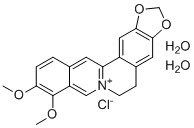 |
| Molecular Formula | C20H22ClNO6 |
| Molecular Weight | 407.84 |
| CAS Registry Number | 5956-60-5 |
| SMILES | COC1=C(C2=C[N+]3=C(C=C2C=C1)C4=CC5=C(C=C4CC3)OCO5)OC.O.O.[Cl-] |
| Melting point | 204-206 °C (dec.) (Expl.) |
|---|---|
| SDS | Available |
|---|---|
 chemBlink Chemical Story
|
Berberine chloride hydrate is a chemical compound derived from berberine, an isoquinoline alkaloid that is widely found in various plants, particularly in species of the *Berberis* genus. Traditionally used in herbal medicine across East Asia and India, it has been valued for its broad spectrum of medicinal properties. The hydrated form, berberine chloride hydrate, is produced by dissolving berberine chloride in water, which leads to an increase in solubility and bioavailability, making it a more accessible compound for pharmaceutical applications. The discovery of berberine dates back to the early 19th century, when it was first isolated from *Berberis* species. Berberine chloride hydrate has garnered attention due to its significant pharmacological effects, including antimicrobial, anti-inflammatory, and antioxidant properties. It has been shown to have promising results in the treatment of various health conditions such as diabetes, cardiovascular diseases, and bacterial infections. One of its most studied effects is the ability to regulate blood glucose levels. Berberine chloride hydrate activates AMP-activated protein kinase (AMPK), a key enzyme in metabolic regulation, which leads to improved insulin sensitivity and enhanced glucose uptake. This mechanism has made it a subject of interest for managing type 2 diabetes. In addition to its metabolic effects, berberine chloride hydrate has demonstrated a strong antimicrobial activity. It is effective against a variety of pathogens, including bacteria, fungi, and parasites, making it a potential natural alternative to conventional antibiotics. Its ability to reduce inflammation further supports its use in treating inflammatory conditions such as inflammatory bowel disease and other chronic inflammatory diseases. Recent studies have also indicated that berberine chloride hydrate can help lower cholesterol levels and reduce the risk of atherosclerosis, a major contributor to cardiovascular diseases. These findings suggest its role in protecting against oxidative stress and promoting heart health. The synthesis of berberine chloride hydrate has been explored through several methods, with the most common approach being the crystallization of berberine chloride from an aqueous solution. This process allows the compound to form in a stable, water-soluble form that is more bioavailable for therapeutic use. Researchers continue to refine the synthesis process to improve yield and purity, ensuring that the compound can be used safely and effectively in clinical applications. In terms of application, berberine chloride hydrate has been incorporated into numerous pharmaceutical formulations and dietary supplements due to its potential therapeutic benefits. It is particularly well-known for its role in managing blood sugar levels and supporting cardiovascular health, which has led to its popularity in the natural health product market. Furthermore, its potential as an antimicrobial agent continues to attract attention in the development of new treatments for drug-resistant infections. References 2023. Modulating Pharmaceutical Properties of Berberine Chloride through Cocrystallization with Benzendiol Isomers. Pharmaceutical Research. DOI: 10.1007/s11095-023-03533-w 2022. A co-crystal berberine-ibuprofen improves obesity by inhibiting the protein kinases TBK1 and IKKε. Communications Biology. DOI: 10.1038/s42003-022-03776-0 2018. Observation of bending, cracking and jumping phenomena on cooling and heating of tetrahydrate berberine chloride crystals. CrystEngComm. DOI: 10.1039/c8ce00114f |
| Market Analysis Reports |