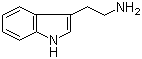
Tryptamine, with the chemical formula C10H12N2, is an indoleamine compound derived from the amino acid tryptophan. It is a naturally occurring substance found in a variety of plants and animals and is involved in several important biological processes. The discovery of tryptamine can be traced back to early studies on the metabolism of tryptophan and its derivatives, with the compound being identified as a key intermediate in the biosynthesis of serotonin, an important neurotransmitter in the human brain.
Tryptamine was first isolated in the early 20th century, and its chemical structure, based on the indole ring system, was identified shortly thereafter. Its relationship to serotonin, discovered in the 1940s, played a significant role in advancing research into the biochemical pathways involving neurotransmitters. As a precursor to serotonin, tryptamine was studied extensively for its role in regulating mood, sleep, and appetite. Researchers also found that tryptamine is involved in various other physiological functions, including the modulation of blood pressure and the regulation of vascular tone.
The most notable application of tryptamine is in the field of neuroscience, particularly in research related to neurotransmitters. Tryptamine is a precursor to serotonin, which is one of the most widely studied neurotransmitters due to its involvement in various physiological and psychological functions. It is known to regulate mood, sleep patterns, and appetite, and it plays a significant role in the pathophysiology of disorders such as depression, anxiety, and schizophrenia. The conversion of tryptamine to serotonin is catalyzed by the enzyme tryptophan hydroxylase, which has been a target for drug development aimed at treating conditions related to serotonin imbalance.
Beyond its role in serotonin synthesis, tryptamine is also involved in the production of other bioactive compounds. For example, tryptamine derivatives are central to the biosynthesis of melatonin, a hormone responsible for regulating circadian rhythms and sleep-wake cycles. Melatonin is synthesized in the pineal gland from serotonin, which in turn is derived from tryptamine. The study of tryptamine and its derivatives has contributed significantly to the understanding of sleep disorders, mood disorders, and the general regulation of the biological clock.
Tryptamine and its derivatives have also attracted attention for their potential pharmacological properties. Some tryptamine-based compounds, such as those classified as hallucinogenic substances, have been studied for their psychoactive effects. Tryptamine itself is structurally similar to other well-known psychoactive compounds, such as DMT (dimethyltryptamine) and psilocybin, which are found in certain plants and mushrooms. These substances have been the subject of ongoing research for their potential therapeutic applications, particularly in the treatment of psychiatric conditions like depression, anxiety, and PTSD.
Tryptamine has applications outside of the pharmaceutical and research sectors as well. It is sometimes used as a building block in the synthesis of other chemicals, particularly those used in the development of agrochemicals and fine chemicals. Its role as a precursor to various biologically active compounds makes it valuable in both the academic and industrial settings, where it serves as an important intermediate in the synthesis of more complex molecules.
In summary, tryptamine is a biologically significant compound involved in the synthesis of neurotransmitters like serotonin and melatonin. Its discovery and subsequent study have provided insight into a variety of physiological processes, including mood regulation, sleep, and appetite control. As a precursor to other bioactive compounds, tryptamine has applications in pharmaceutical research, particularly in the development of treatments for mood disorders and sleep-related issues. Its chemical structure and pharmacological properties also make it a subject of interest in the study of psychoactive compounds and their potential therapeutic uses.
References
2024. Identification of technological/metabolic/environmental profiles associated with cheeses accumulating the neuroactive compound tryptamine. Food Chemistry, 463.
DOI: 10.1016/j.foodchem.2024.140622
2024. The dynamic of biogenic amines and higher alcohols of Chinese rice wine during fermentation. Food Science and Biotechnology, 33(12).
DOI: 10.1007/s10068-024-01754-2
2024. Influence of Tryptophan Metabolism on the Protective Effect of Weissella paramesenteroides WpK4 in a Murine Model of Chemotherapy-Induced Intestinal Mucositis. Probiotics and Antimicrobial Proteins, 16(6).
DOI: 10.1007/s12602-024-10413-1
|




 GHS07 Warning Details
 chemBlink Chemical Story